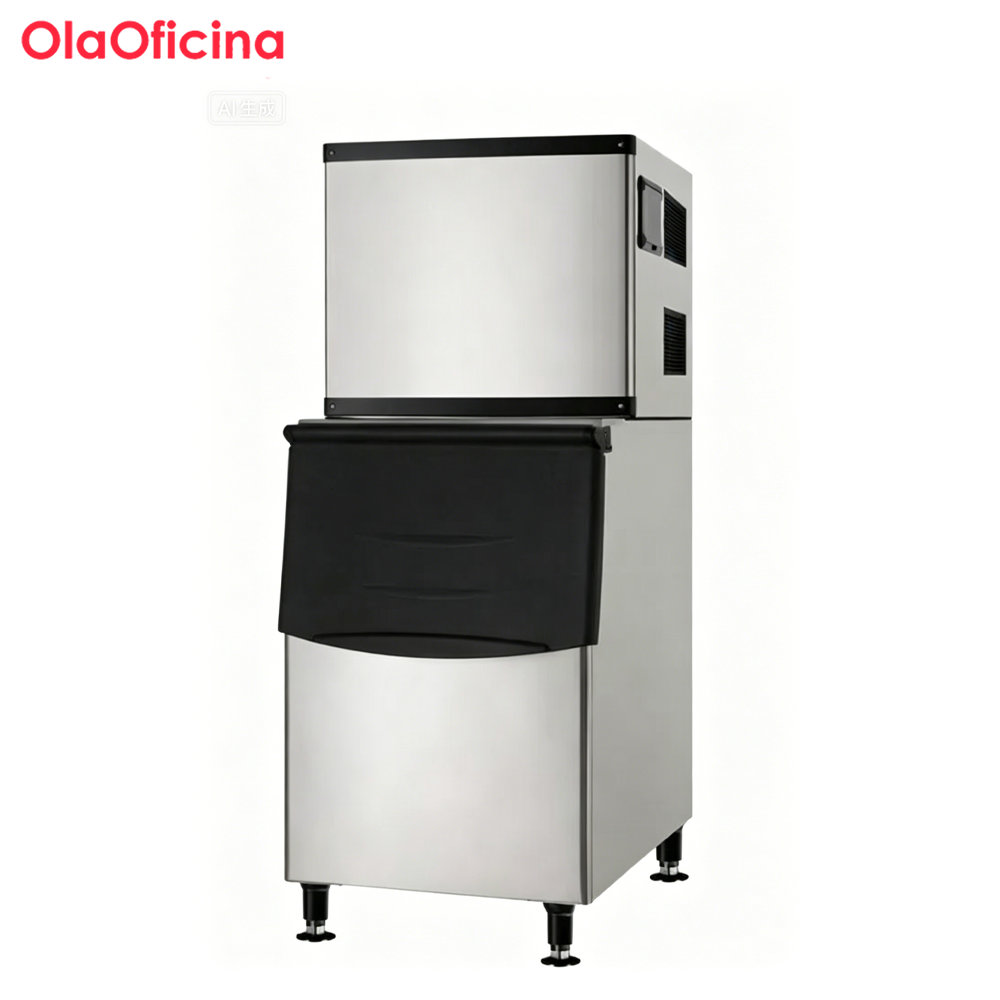


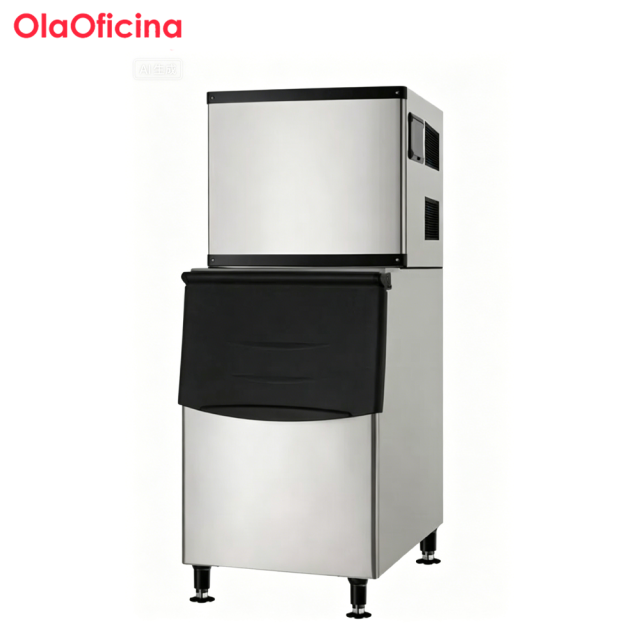


Ice is part of the drinks menu, not a side errand. This commercial ice maker machine is a stainless steel unit from our ice-making equipment range, listed in the Commercial Beverage and Dessert Machines collection, and it makes ice where it is served — behind the bar, at the beverage station or in the back kitchen — so service is not waiting on a delivery or rationing the last bag through the busiest hour of the shift.
As an ice maker machine supplier to hotels, restaurants, cafés, bars, dessert shops, convenience stores and catering kitchens, we keep the buying side straightforward: one contact covers the specification, the order, the paperwork and the follow-up. The machine is usually planned as part of a wider beverage programme, so it can sit on the same station as slush or ice cream equipment where that is how your menu runs.
Day to day it does one job — keeping the bin full through service. Most buyers are replacing something: an ageing machine that has slowed down, a domestic-style countertop unit that cannot keep pace once a drinks menu grows, or a standing order for bagged ice that has to be stored, restocked and paid for week after week.
Four details decide the right configuration, and they are worth settling before you order: how much ice you get through on your busiest day, the space and clearance around the machine, the water inlet and drain route, and the power supply on site. Send those to us with a photo of the intended position and we will confirm the machine that fits.
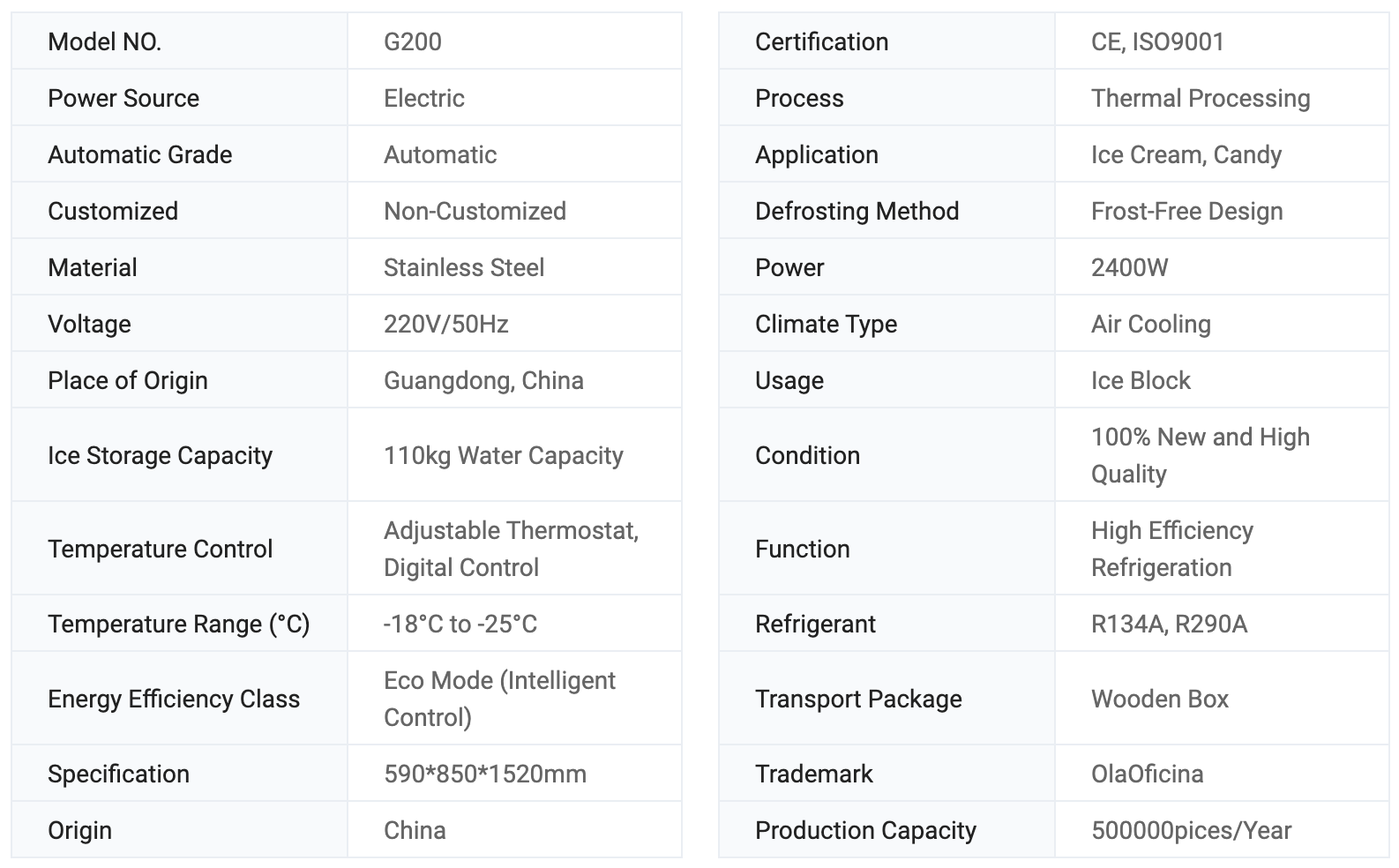
| Model reference | No.G200 |
| Machine type | Ice maker, Ice Making Equipment range |
| Machine class | Commercial grade ice maker |
| Body material | Stainless steel |
| Ice output | Matched to your daily requirement |
| Ice form | Confirmed against your drinks programme |
| Electrical supply | Configured for your market |
| Refrigerant | Stated on the specification sheet |
| Cooling | Air-cooled availability confirmed on enquiry |
| Footprint | Bench or undercounter; confirmed on the drawing |
| Water and drainage | Mains inlet and gravity drain; confirmed on site |
Stainless steel is doing real work here, not decoration. The cabinet, lid and ice-contact parts are stainless steel because a bar back or a kitchen pass is wet, salty and wiped down constantly; this is the material that keeps its appearance in that environment and stays easy to sanitise. The cabinet finish is brushed rather than mirror-polished, so everyday fingerprints and marks disappear instead of showing up under the lights.
As a commercial ice machine manufacturer, we pay attention to the parts that wear first. Panel joints and the frame are assembled so the body stays square after years of lids being opened and bins being emptied, the bin is insulated so the ice you have already made is not melting while the machine makes more, and the bin floor and corners are shaped so meltwater drains away instead of pooling under the ice. Feet, lid hardware and gaskets are the components we expect to be replaced over the machine's life, which is why we would rather they were serviceable than hidden.
Two points are worth confirming rather than assuming. Tell us the market the machine is going to and we will confirm the panel and liner specification that suits it, including the finish you want if the unit will be visible to guests rather than tucked into a back kitchen.
Daily handling decides how the machine performs. Use the scoop, never a glass or a hand, keep the lid closed between servings, and treat the bin as an ice store rather than a cooler — bottles, cans and warm drinks put back into it are the fastest way to cloudy, fast-melting ice and a cleaning job nobody wants. Ice served with a clean scoop from a closed bin simply tastes better in the glass.
Cleaning is straightforward, but it has to be scheduled. Wash the bin, lid, scoop and scoop holder with a mild detergent, rinse thoroughly and dry before refilling, and check the lid gasket while you are in there. How often the machine needs descaling depends on your water hardness and how much ice you make, so ask us for a cleaning rhythm that matches your supply and keep to it; a commercial grade ice maker will keep producing through a neglected bin, but the ice will show it.
Plan for closures as well. For a long shutdown, empty the bin, clean and dry it, and leave the lid open to air rather than closing damp air inside. Before restarting, clean again and discard the first batches. Print the routine and keep it near the machine so a new starter can follow it without being shown twice.
| Product specification sheet | Output, electrical data, refrigerant and dimensions for this model |
| Dimensioned drawing | Footprint, clearances and the position of water, drain and power connections |
| English user manual | Setup, first run, cleaning routine and basic troubleshooting |
| Operation and cleaning guidance | Step-by-step walk-through, available as video for many of our models |
| Product photography and video | Images and clips you can use in your own listings |
| Reference photograph | The machine as supplied, so you can compare finish and layout before ordering |
| Pre-shipment check record | Available on request so you know how the unit performed before dispatch |
Filtration on the water inlet. Scale and sediment arrive with the mains water in any commercial ice maker machine, and they are what gradually coat the evaporator, slow the freeze cycle and leave a background taste in the cube. Fit an inline cartridge filter on the inlet line, downstream of the isolator so it can be serviced without shutting the supply off, and flush new pipework thoroughly before the first fill so swarf and joint debris never reach the evaporator. If you do not have a water report, a hardness test strip or a TDS reading taken at the tap is enough for us to recommend a cartridge.
Replacement rhythm and running cost. The filter is the one part of this machine you plan to throw away and replace, and the interval follows your water hardness and daily ice volume rather than the calendar. Skip it and the machine still makes ice — what changes is the pace of production over the years, the taste in the glass and how often the evaporator needs descaling. Keep one cartridge on the shelf so a change takes minutes, let the same rhythm drive the descaling schedule, and tell us your supply and volume so we can put the interval in writing with the machine quotation rather than leaving the running cost to be discovered later.
Co-locating with slush and ice cream equipment. This model comes from the same Commercial Beverage and Dessert Machines range as our slush machines and ice cream machines, and buyers regularly build one beverage bench around all three so a single operator can cover iced drinks, frozen drinks and desserts without leaving the station. Plan it as part of that line rather than an isolated unit: give each machine its own ventilation gap so heat is rejected into open air instead of into the next machine's intake, and leave clearance for lids, panels and bins to open.
Shared water and drainage. Where machines share a bench, run the water supply with its own isolator for each unit and take every drain to the gully on its own continuous fall — chaining two machines onto one drain run is the usual reason a beverage station ends up with a wet floor at the busiest hour. Add the electrical loads together and check the circuit with your electrician before the bench is built, then send us the layout; we will check the positions and connection points of each model against the drawings.
One supplier for the station. Buying the ice, slush and ice cream equipment from one range keeps cartridges, gaskets, scoops and service questions with a single contact, and it means one packing and shipping plan when the station is assembled. As a commercial ice machine manufacturer we can also tell you which parts are worth holding at that station so a small fault does not take three machines off the menu at once.
Ola Oficina Co., Ltd is a professional kitchen equipment supplier serving hotels and restaurants, and we work with buyers who would rather source from a company covering a full range than from several separate vendors. Purchasing, documentation and communication stay with one team from enquiry through delivery. OEM and customisation enquiries are welcome — share your branding or configuration requirements and we will confirm what we can support. Send us your project details and we will reply with availability, production scheduling and shipping arrangements.
That depends on your volume and your local supply, and it is worth running your own numbers. What changes either way is handling and availability: ice made on site is produced where it is served, touched by fewer people and ready whenever the drinks menu is busy, while bagged ice has to be ordered, delivered, stored and restocked — and it takes freezer or store-room space a busy kitchen rarely has spare. As an ice maker machine supplier we work with venues on both routes, so tell us your daily volume and we will tell you plainly where the break-even sits for you.
We recommend inline filtration on the water inlet. Scale and sediment arrive with the water, and they are what slow production and gradually block the evaporator; they also show up in the taste of the ice. The right cartridge depends on your water hardness and how much ice you make, so tell us about your supply and we will suggest a filter and a replacement rhythm. Change it on that rhythm rather than waiting until the ice tastes wrong or production drops.
Work from your busiest day, not your average one. Tell us how many covers you serve, which drinks take ice, how long your peak lasts and how much ice you currently hold in the bin, and we will confirm the output that covers it with a margin. A commercial ice maker machine sized on peak demand keeps drinks flowing on a Friday night; one sized on a quiet Tuesday runs out exactly when it matters. If your requirement sits between two options, say so — we would rather you took the smaller machine that runs comfortably than one that never works hard.
Yes. Electrical configuration is set for the market the machine is going to, and as a commercial ice machine manufacturer we confirm voltage and plug type before the order enters production. Tell us the supply you have on site, or the supply your customers use if you are buying to resell, and we will match it. If you buy for more than one market, mention it at the quotation stage so each configuration can be planned separately.
Yes. It belongs to the same Commercial Beverage and Dessert Machines range as our slush machines and ice cream machines, and buyers often plan it onto one beverage bench with them. The practical points are shared water and drainage planning and enough airflow between units, so bring us your station layout and we will check the positions. Sourcing from one range also keeps spare-parts conversations in one place.