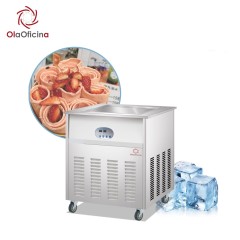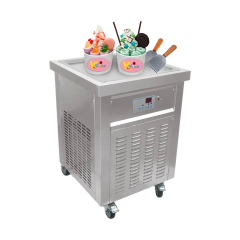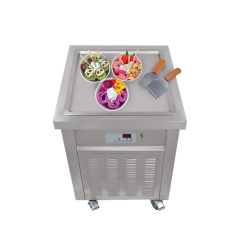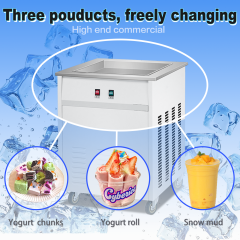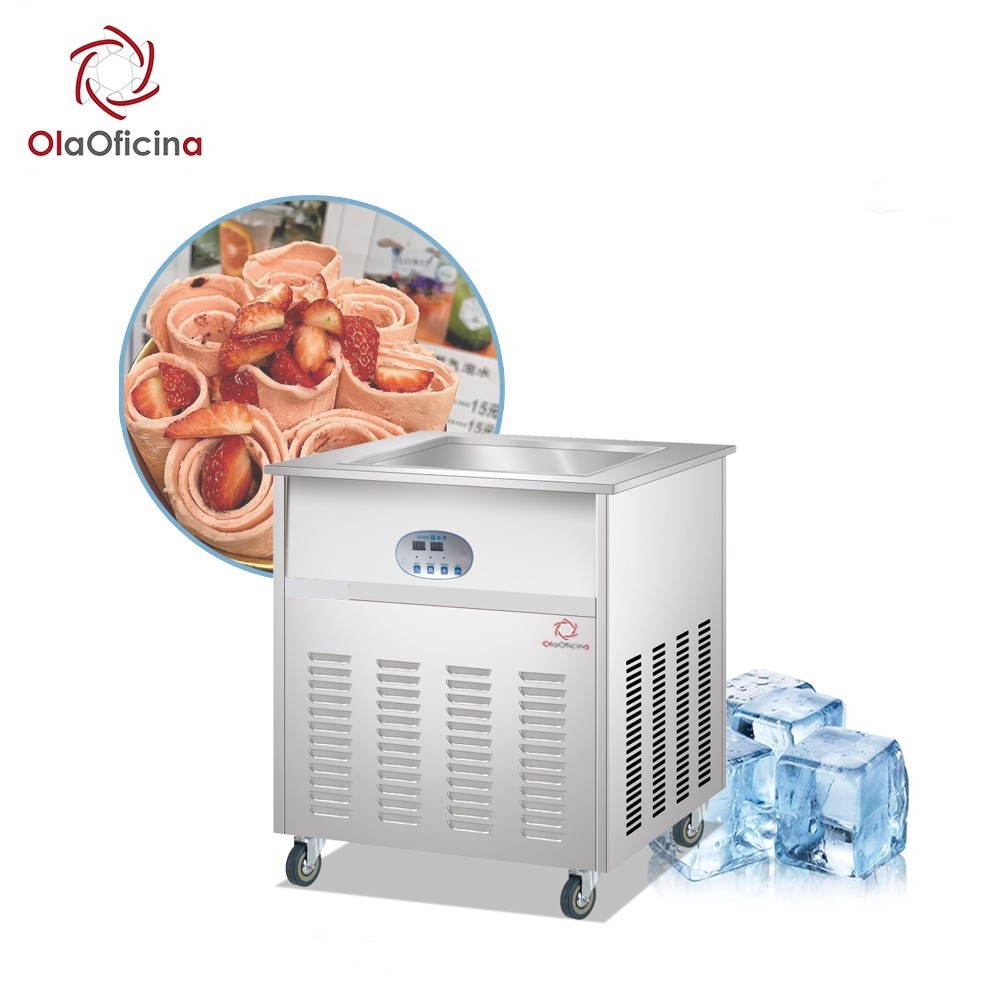
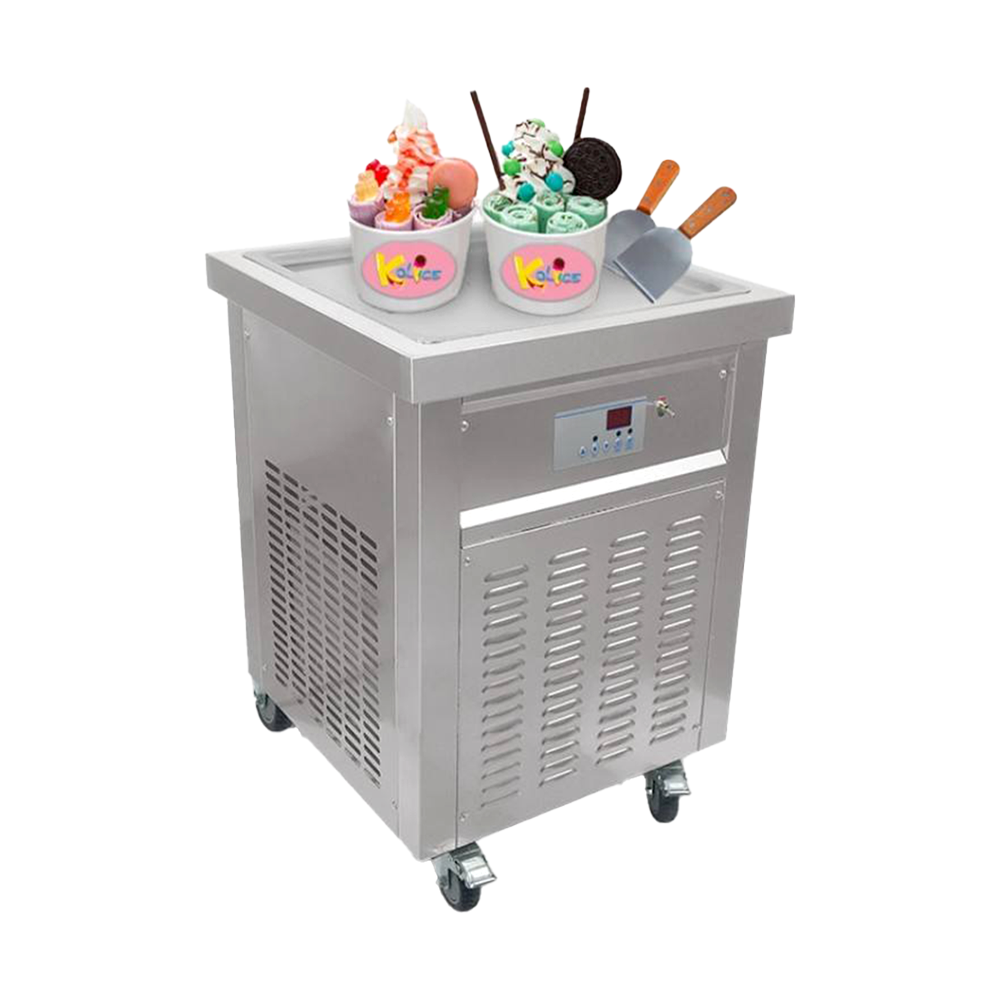
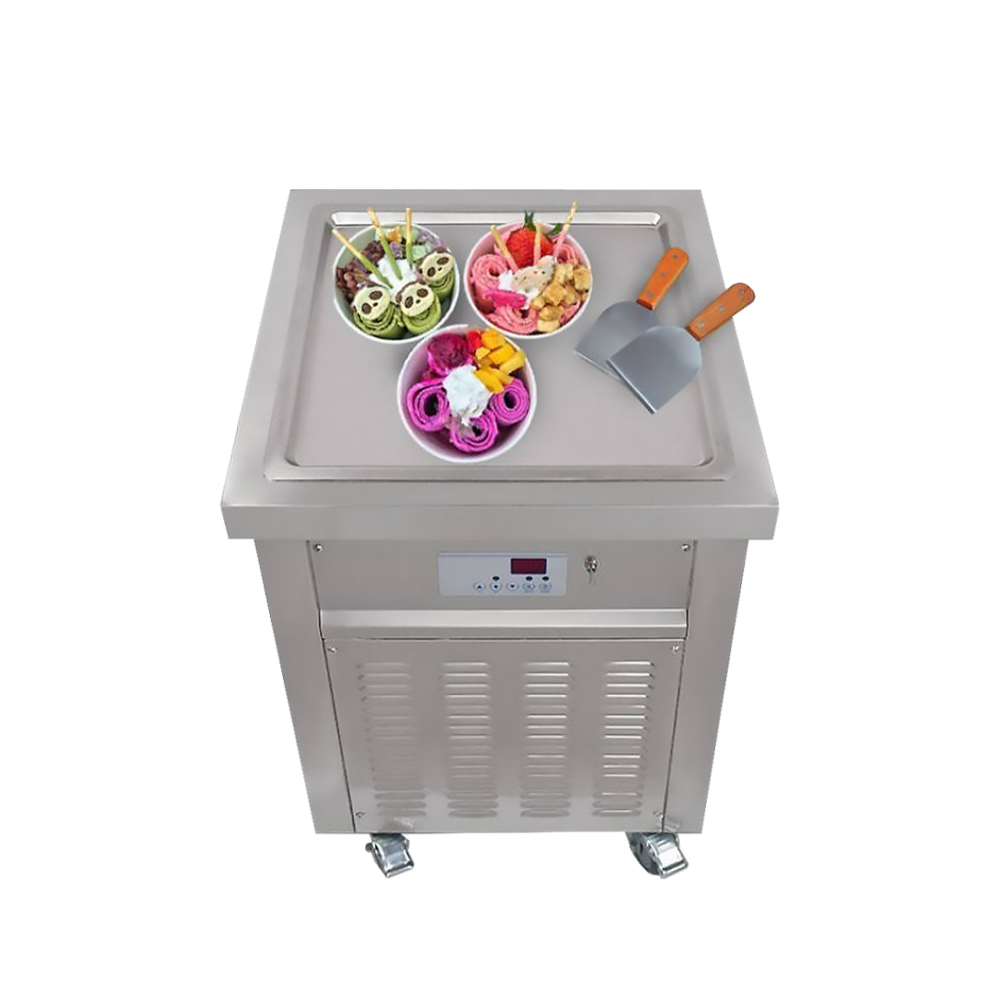
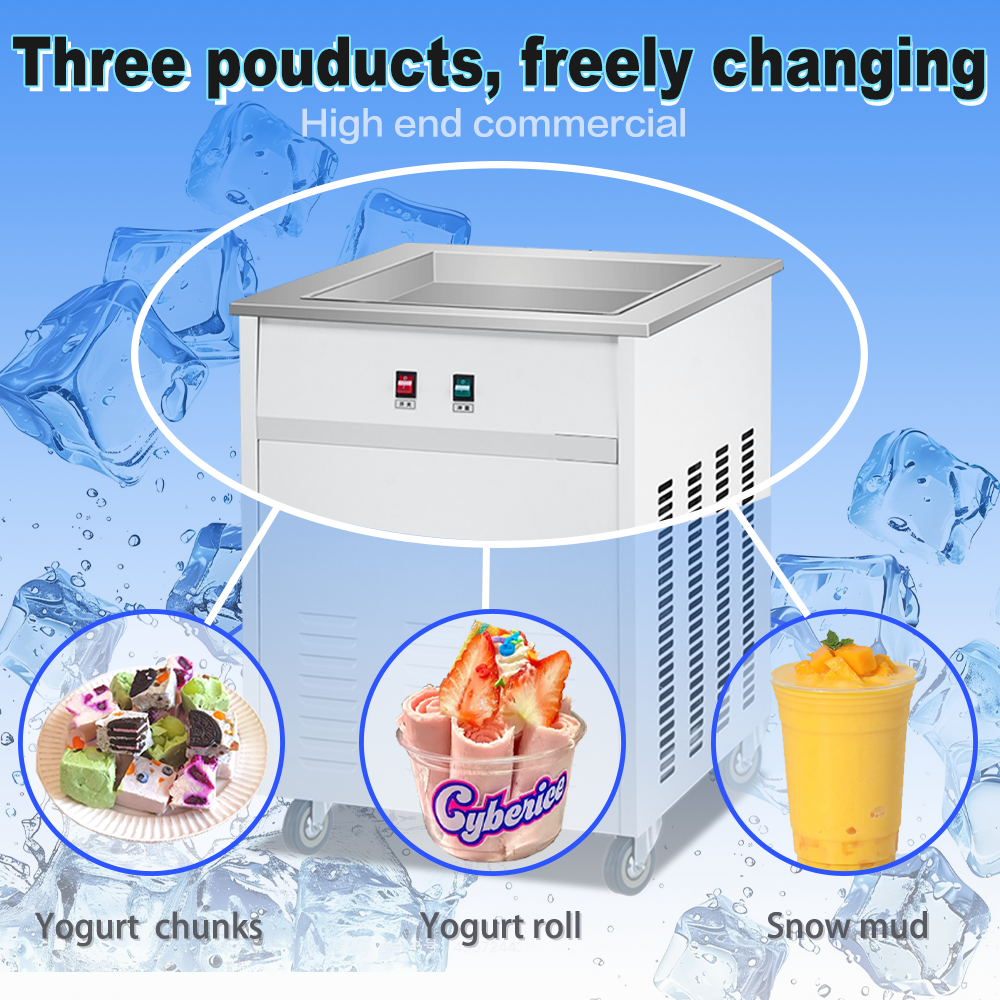
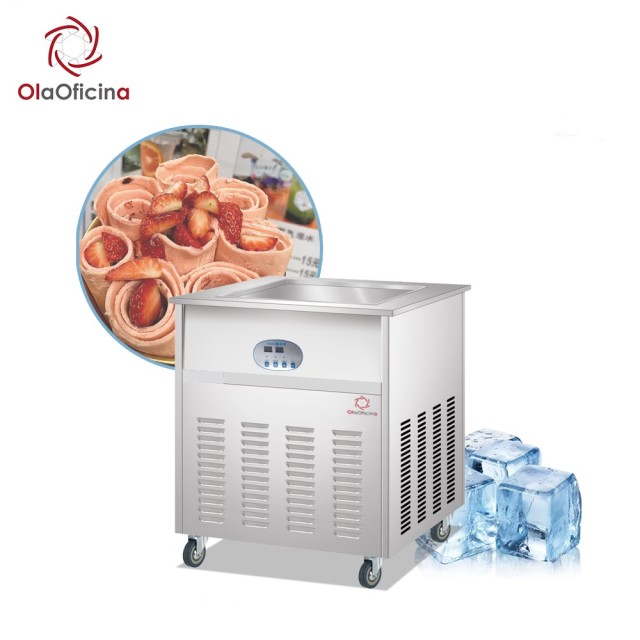
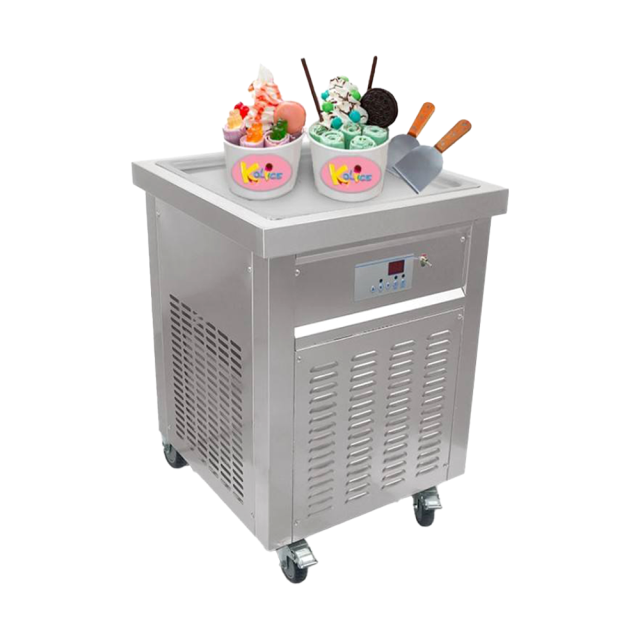
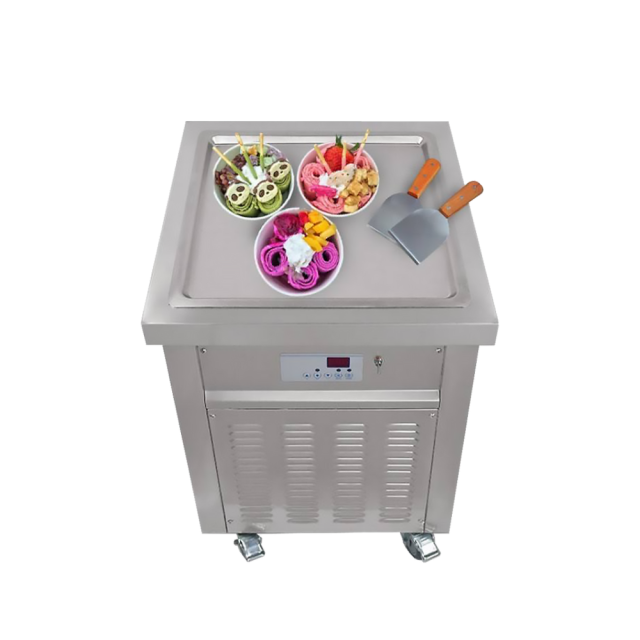



Fried ice cream, rolled ice cream, stir-fried ice cream — the dessert carries several names and is made the same way under all of them. A liquid base is poured onto a very cold plate, mix-ins are folded through it, the mixture is spread thin and then scraped into rolls while the customer watches. This machine is that plate, together with the controls and the cabinet that let it work at a commercial counter, and it is the piece of equipment that turns a standard dessert list into something made to order.
Most businesses that add it are looking for one signature item rather than a full production line. A café with an established drinks menu uses it for a single dessert; a restaurant makes rolls as the order comes in; a hotel buffet runs it as a live station guests stop and watch; a dessert kiosk can build its whole menu around it. Because each portion is made individually, the machine suits operators serving a handful of desserts an evening as well as busier rooms where portions are made back to back through service.
Ola Oficina is one of the ice cream machine manufacturers and commercial kitchen equipment suppliers working directly with food service buyers from Guangzhou. This commercial ice cream maker machine is supplied as a single assembled unit, ready to be positioned on a dessert counter, a prep table or a stand of its own.
| Machine type | Fried ice cream and rolled ice cream machine |
| Freezing surface | Flat rectangular cold plate |
| Body material | Stainless steel |
| Finish | Brushed stainless steel |
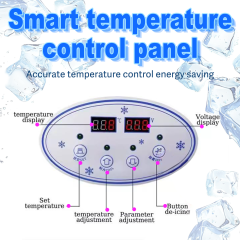
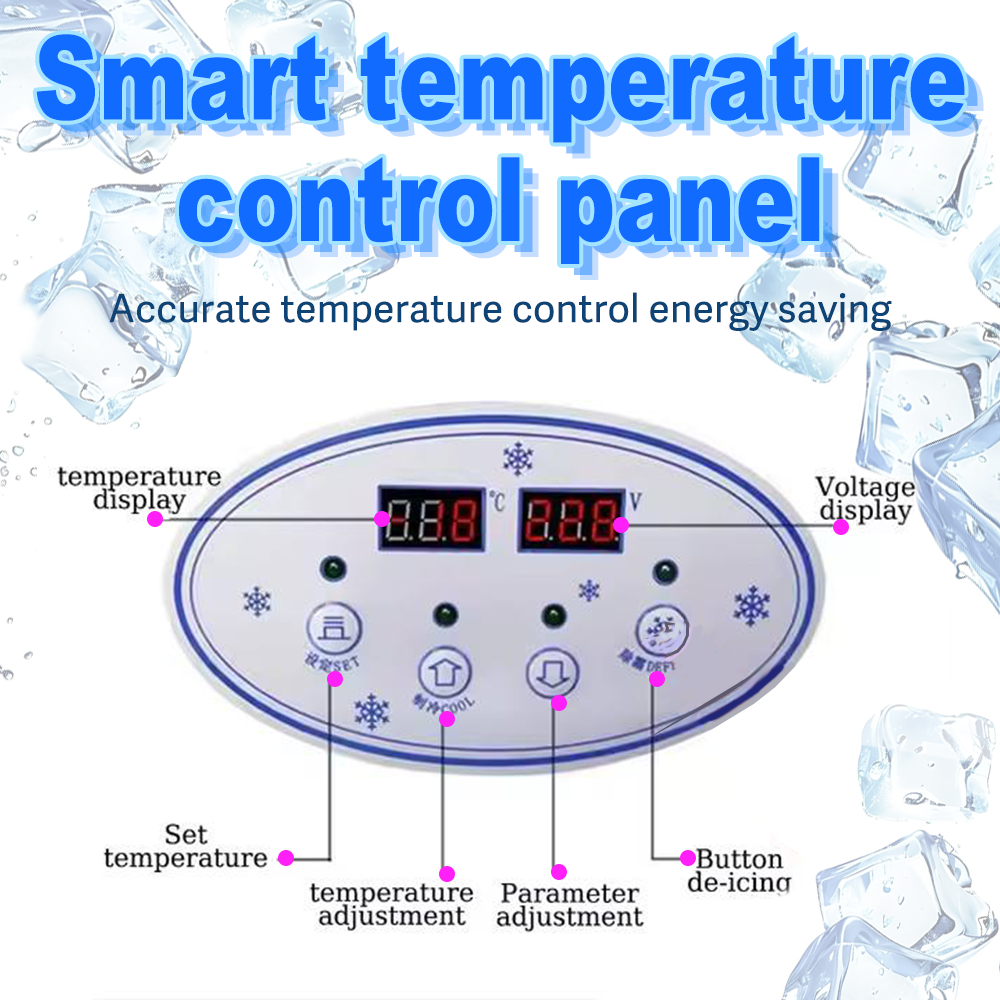
| Controls | Control panel with display and function buttons |
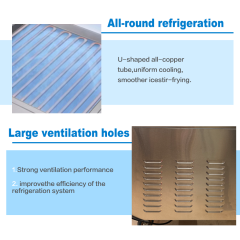
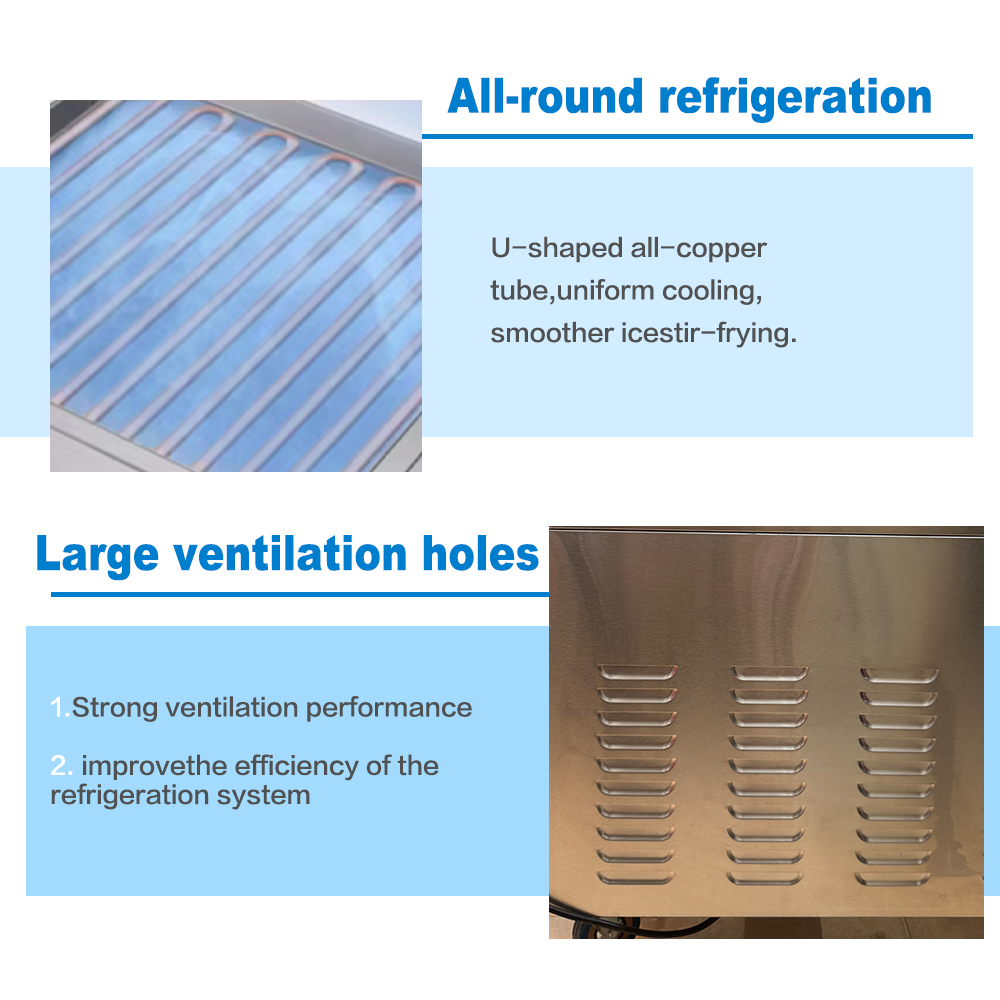
| Ventilation | Louvered panels on the body |
| Body style | Cabinet with the cold plate forming the working top |
| Assembly | Supplied as one assembled unit, ready to be positioned |
| Base compatibility | Ice cream, frozen yogurt and fruit-based mixes |
| Mix-in handling | Fruit, biscuit, nuts, chocolate and syrups folded through on the plate |
| Serving format | Portions rolled to order rather than pre-scooped |
| Workflow | Pour, spread, fold and scrape, repeated for each order |
| Typical positions | Dessert counter, prep table or a stand of its own |
| Operator | One person per station after a short briefing |
Cleaning is a routine that runs alongside service rather than a deep clean saved for the end of the week. Between orders, pull the scraper across the plate to lift the last of the mix, then wipe the surface with a clean cloth so the next portion starts on a clear, even plate. Keep mix-in trays, spoons and serving cups off the plate itself — anything left there cools down, sticks, and takes up working space you need back within seconds.
At the end of the day, switch the machine off and clean the plate and the surrounding worktop while the rest of the station is being closed down. Wash scrapers, cups, serving bowls and mix-in trays as normal food-contact items. Wipe the stainless steel ice cream freezer cabinet with a soft cloth and a mild detergent rather than an abrasive pad, which dulls the brushed finish over time. Do not spray water at the control panel or into the vents.
Brush dust and grease off the louvered panels once a week or so, starting with the intake side, because a blocked panel makes the machine work harder than it needs to. Leave both the plate and the cabinet dry before the next shift; dairy residue left overnight is the most common reason a plate begins to look tired after a few months of service. If the machine is going to stand idle for a long stretch, clean and dry it fully, then let your sales contact know how long it will be out of use so they can advise on the right preparation.
| Decision point | Soft-serve machine | Fried ice cream plate |
| The order the customer gets | A finished cone or cup handed over in the same shape every time, which is what regulars come back for | Rolls built from the base and mix-ins chosen at the counter, so the ice cream maker turns out a different dessert with each order |
| Speed through a rush | Serve is close to instant once the mix is ready, so a queue clears quickly | Each portion takes one hands-on pass at the plate, which suits dessert orders arriving a few at a time rather than all at once |
| Where menu variety comes from | Set by the flavours loaded into the cylinders and dispensing heads of the machine | Comes from the mix-in trays beside the plate, so a seasonal special is a new tray of fruit or biscuit rather than new equipment |
| Staffing the station | One person draws the order and moves on to the next customer | One person per portion — pour, fold, spread, scrape — so the plate needs a trained pair of hands through service |
| Daily cleaning | Hopper, freezing cylinder and seal strip-down at the end of the day | Scrape and wipe between orders, with the deeper clean left to closing |
| Mix standing over | Mix is held in the machine through service, so volume has to be planned against expected sales | Base is portioned per order, so a slow evening leaves nothing standing in a freezing cylinder |
| Counter space | A fixed unit with clearance in front for drawing cones and reaching cups and toppings | The plate, plus mix-in trays, scrapers and serving cups within arm's reach of the person rolling |
| If cone service is non-negotiable | Soft serve is the one of the two that dispenses a cone, so keep it, or ask us about the soft-serve models in our range | The plate adds a made-to-order dessert to the menu; it is not a like-for-like swap for the commercial ice cream maker machine that serves cones all day |
Ola Oficina Co., Ltd is a professional kitchen equipment supplier serving hotels and restaurants, and we work with buyers who would rather source from a company covering a full range than from several separate vendors. Purchasing, documentation and communication stay with one team from enquiry through delivery. OEM and customisation enquiries are welcome — share your branding or configuration requirements and we will confirm what we can support. Send us your project details and we will reply with availability, production scheduling and shipping arrangements.
It is a chilled flat plate set into a stainless steel cabinet. You pour the base onto the plate, fold in what the customer has chosen, spread the mixture into a thin even layer, then scrape it into rolls and lift them into a cup or a bowl. Nothing is deep-fried and nothing is pre-frozen — the name refers to the way the mix is worked across the cold surface. Each portion is made on a single pass at the plate and served straight away.
Frozen yogurt and fruit-based sorbet-style mixes work the same way, and most of the menu variety comes from the mix-ins: fresh fruit, berries, biscuit, chocolate, nuts, syrups or a house sauce. Think of it as an ice cream maker with no tub and no scoop — the recipe is built on the plate in front of the customer, so the same base can finish as a different dessert for every order. Rolled yogurt desserts sit comfortably beside ice cream on the same menu.
Supply varies by market, so tell us the country and the type of outlet in your kitchen before you order and we will confirm the matching configuration. It is better to settle that at quotation stage than to find a mismatch when the machine is uncrated.
Yes. Most operators use a house base or a mix from a local supplier, and the working method does not change. What matters is that the base freezes to a firm, rollable consistency and that the mix-ins are cut small enough to fold through. Tell your sales contact what you plan to use and we can advise on consistency and portion size before your first production run.
The plate is scraped and wiped between orders anyway, so a fruit-based mix can follow a dairy one on the same surface. For a customer with a dairy allergy, keep a separate scraper and cloth for non-dairy orders and make those portions first, on a freshly wiped plate. If you need guidance on separating allergens at the station, ask your sales contact when you order.
A soft-serve machine dispenses a finished mix from a tank; this commercial ice cream maker machine makes each dessert to order on a cold plate, which is why it suits menus where the customer chooses the mix-ins and watches the rolls being made. The two work well together — many dessert counters run soft serve for speed and a rolled ice cream station for the order that is worth a premium.
Branding is arranged at order stage rather than afterwards, so tell us at quotation what you need — logo, label or packaging. Because we are ice cream machine manufacturers, we can confirm what is possible for this model before you commit to the order.