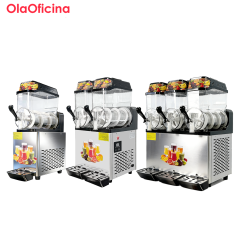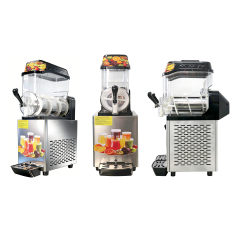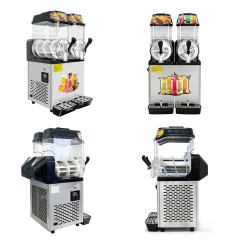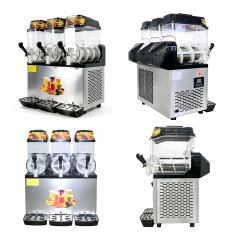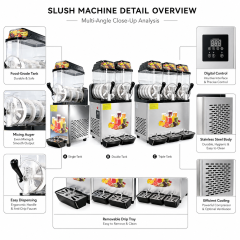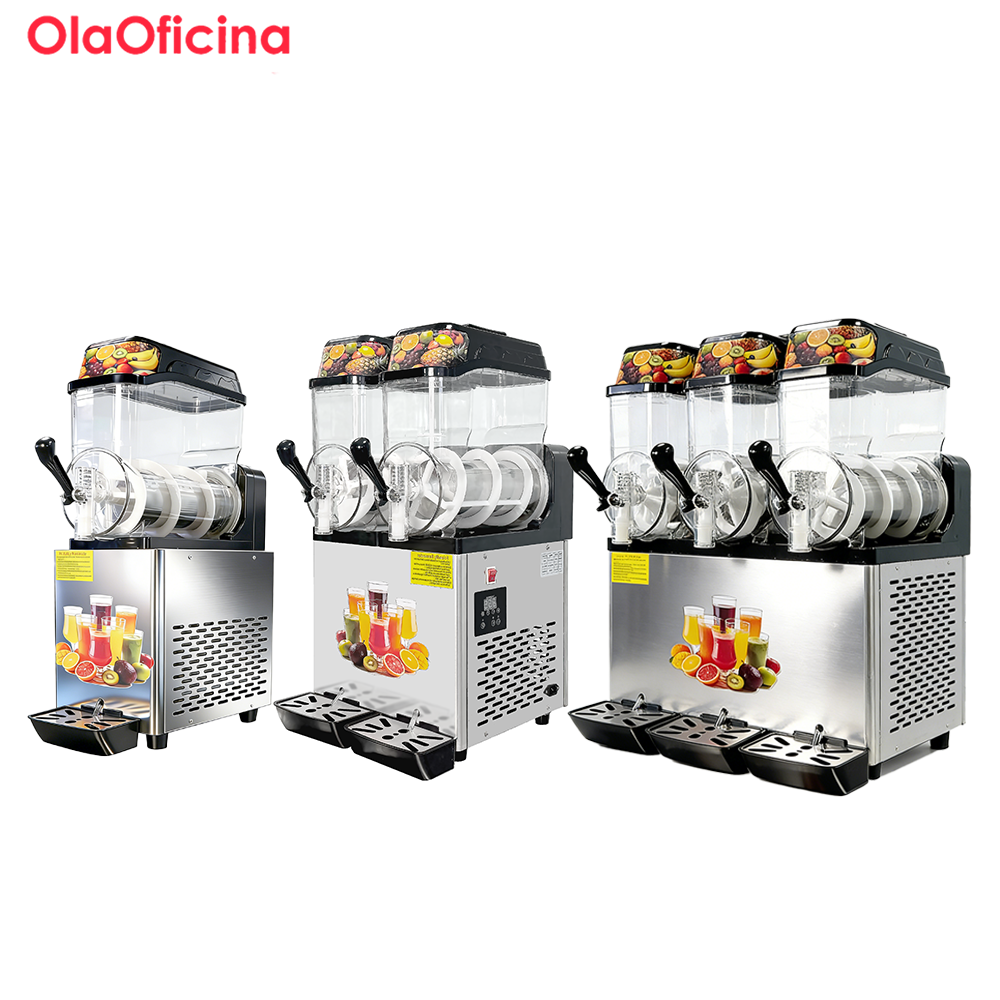
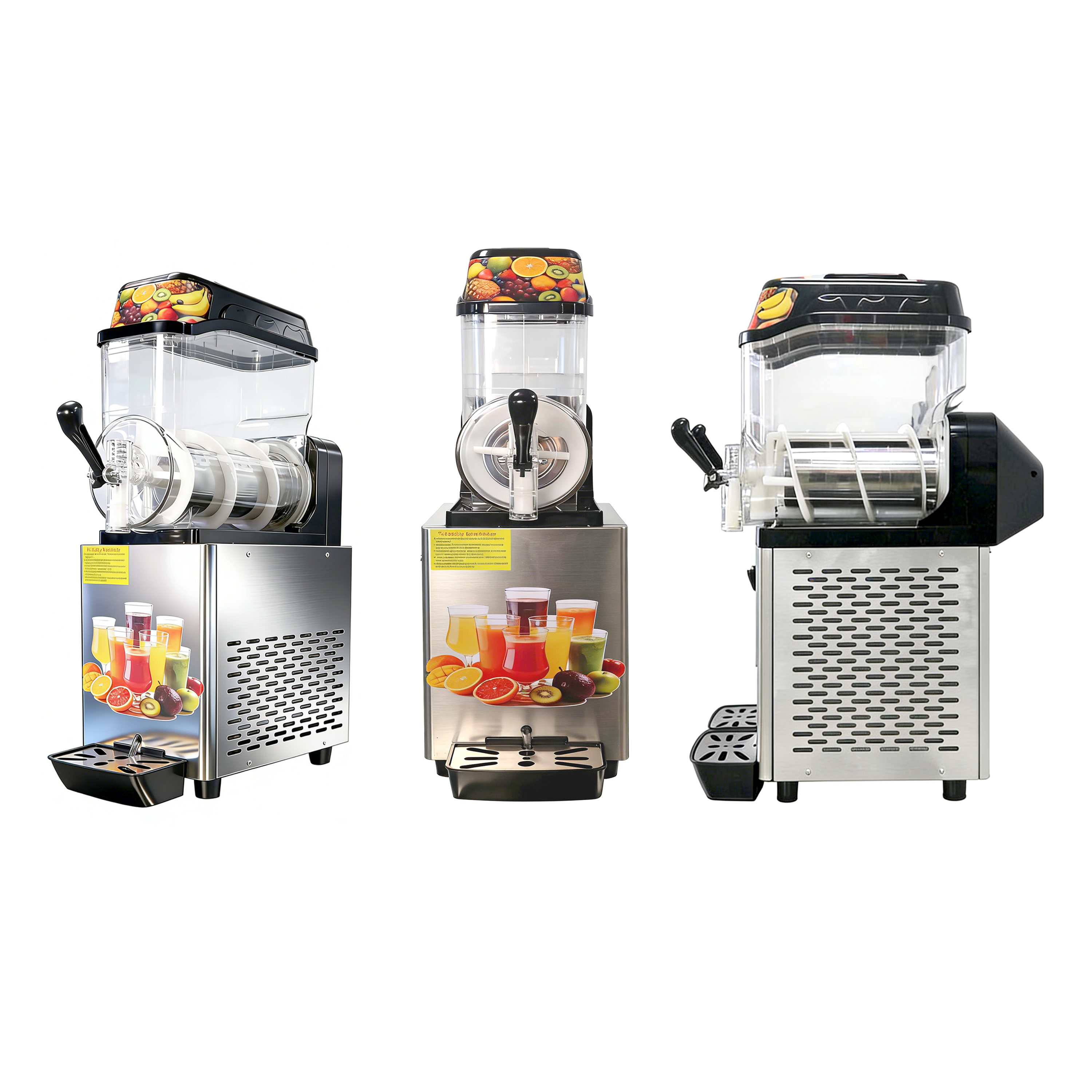
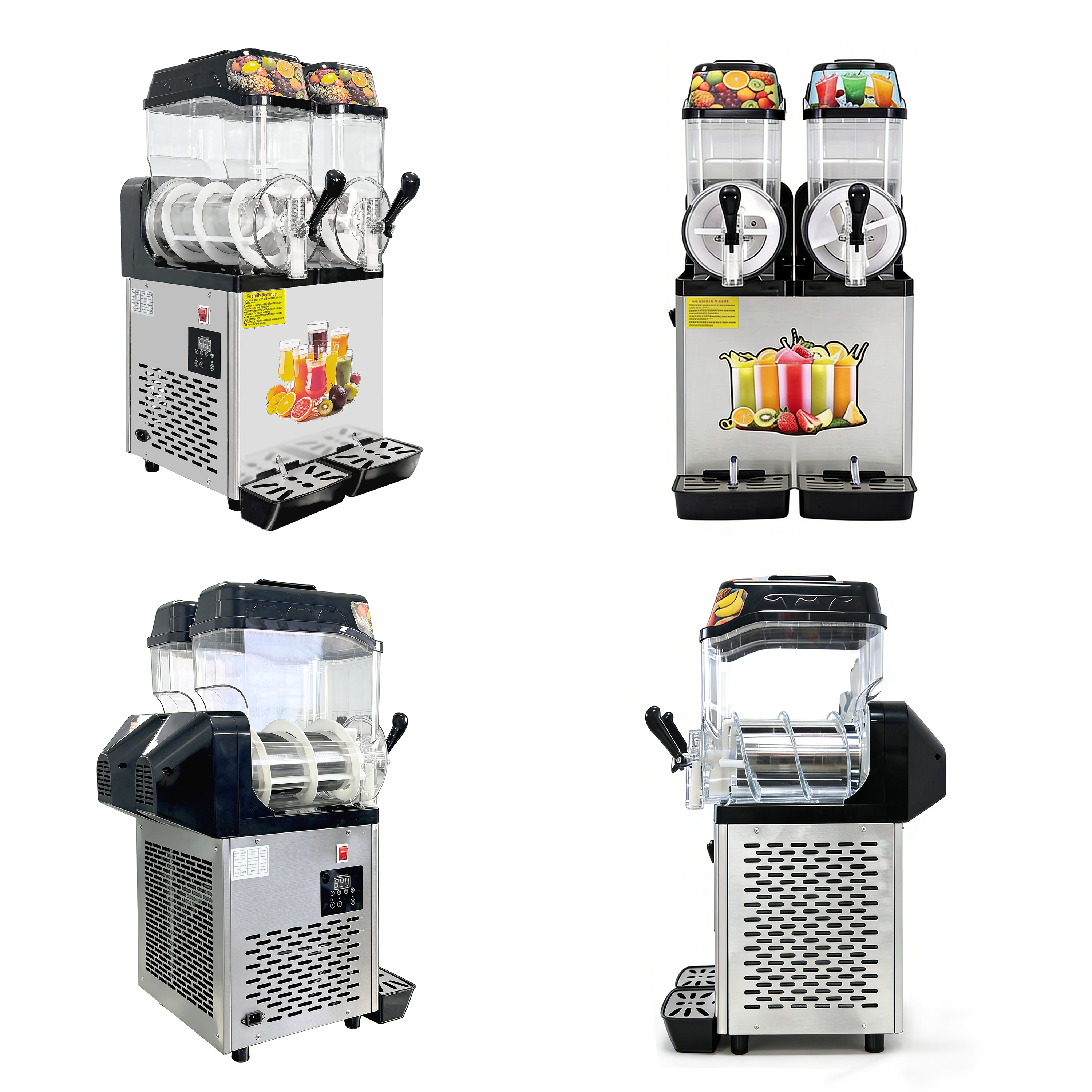
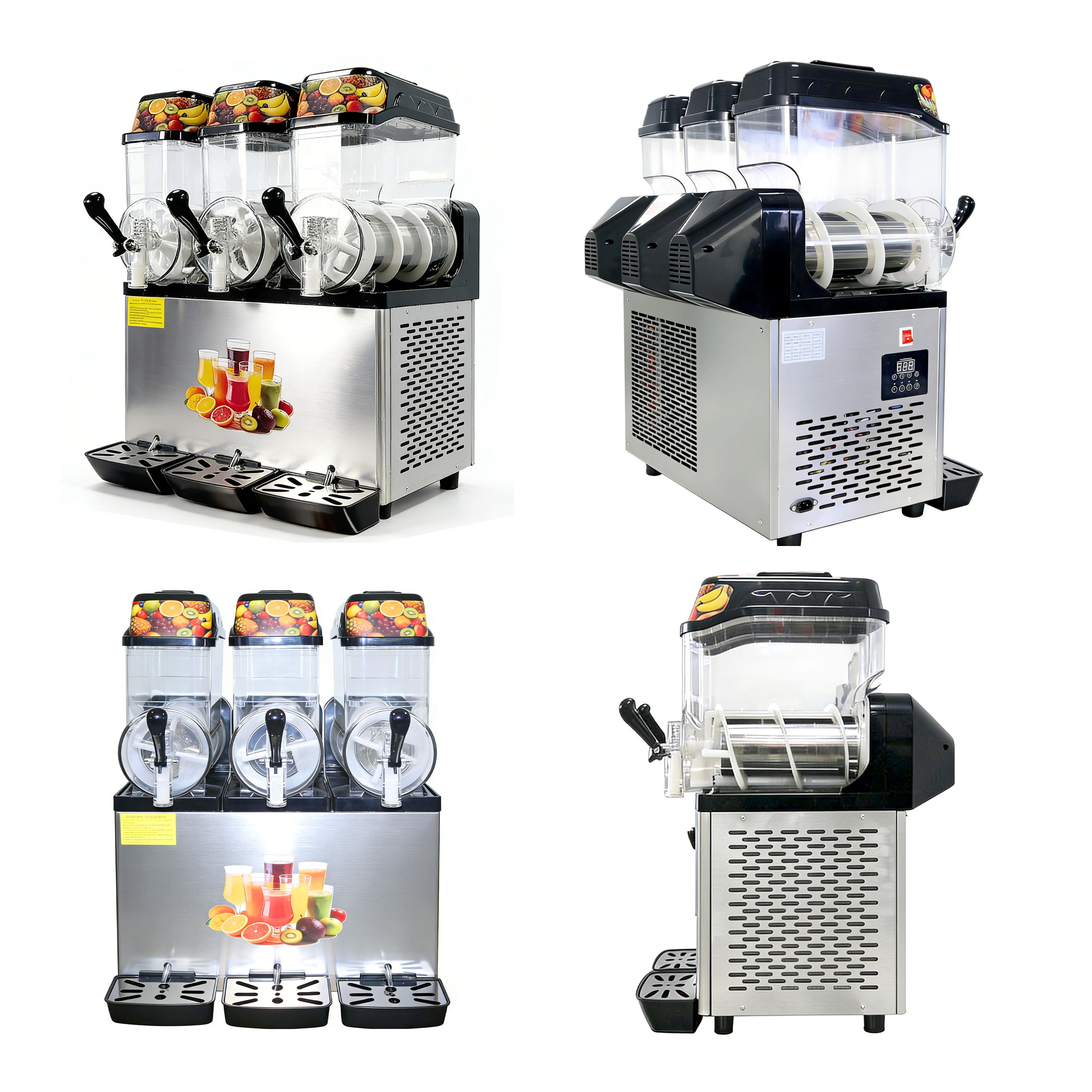
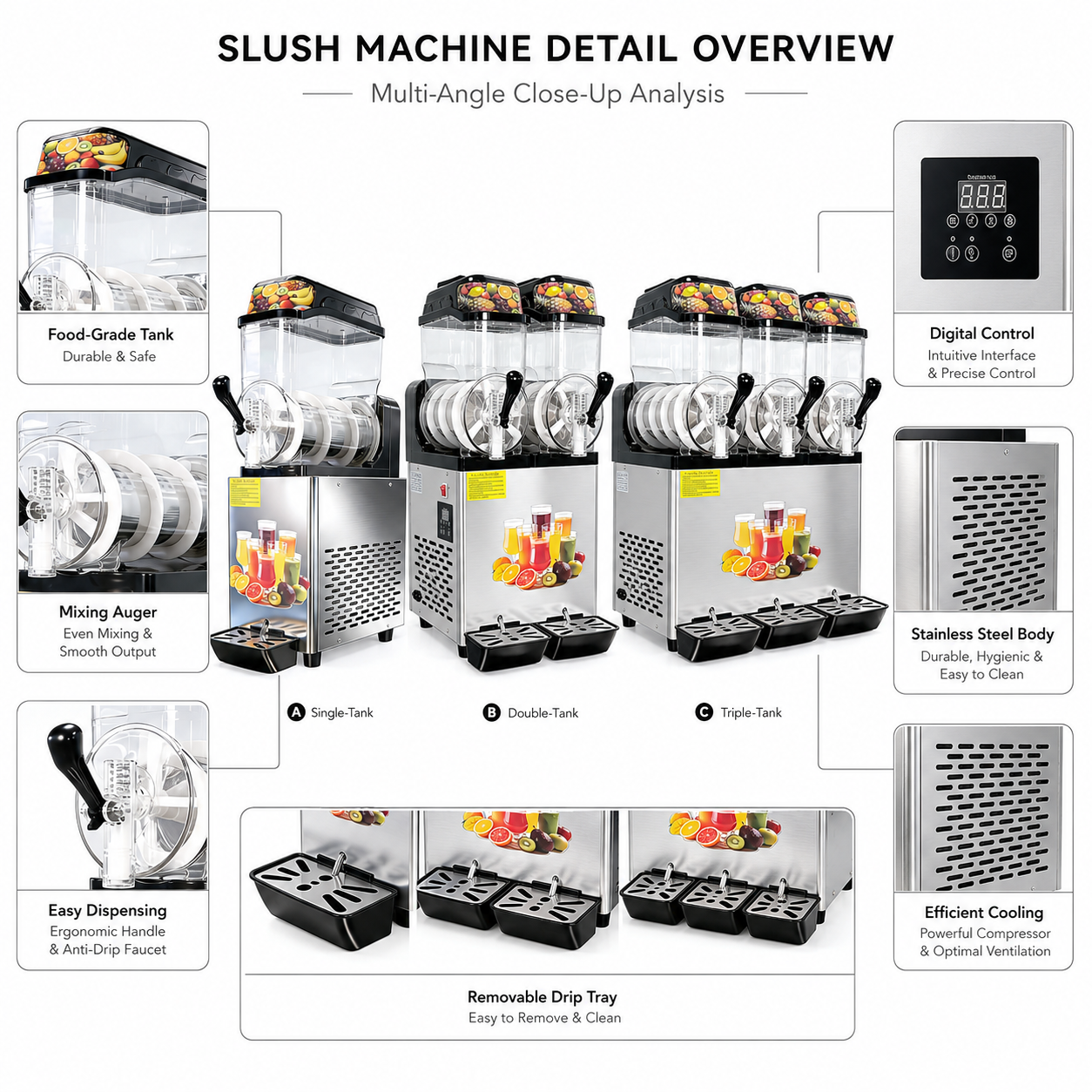
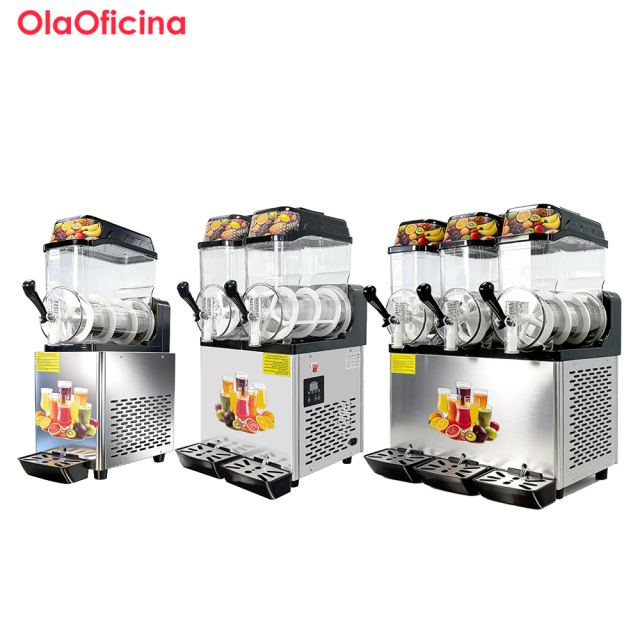
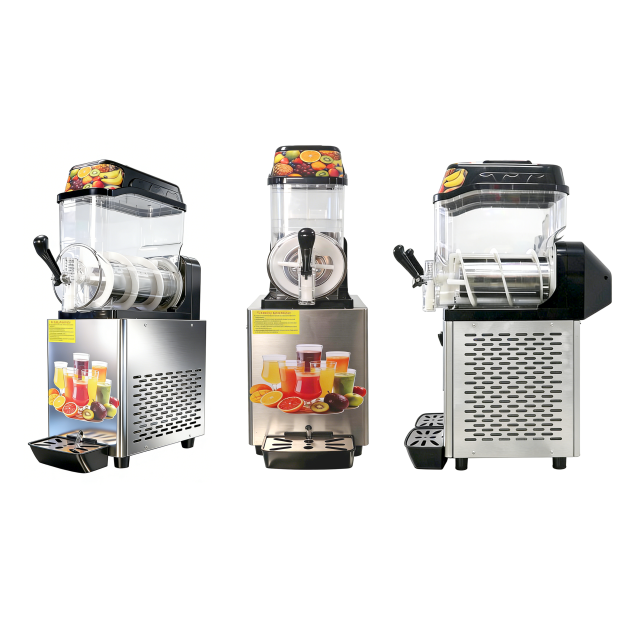
Commercial slush machine with 1-3 tanks, 12L per tank. Equipped with Embraco, Wanbao, GMCC or Donper compressors, R290 refrigerant and OEM support.
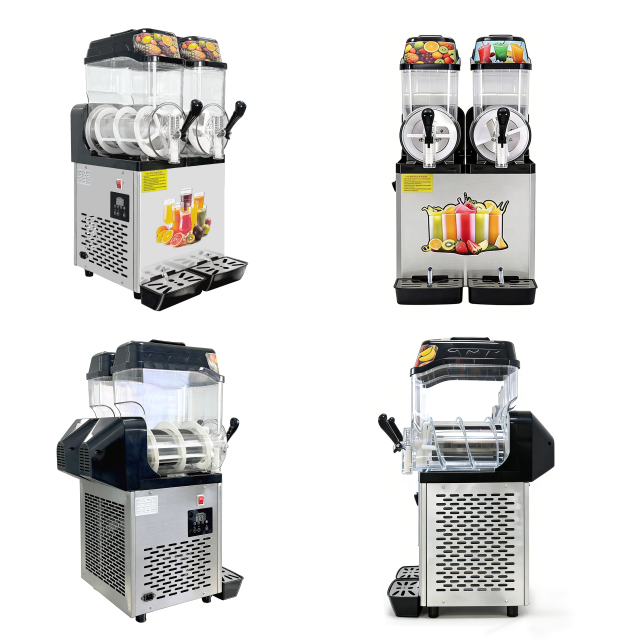
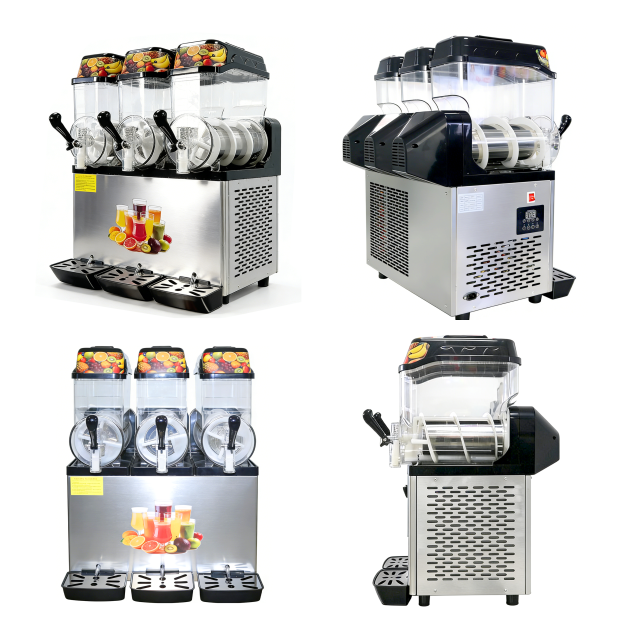
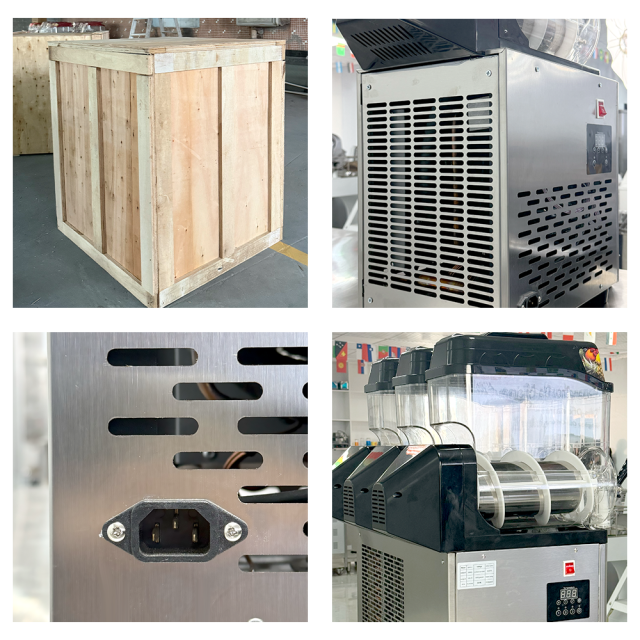
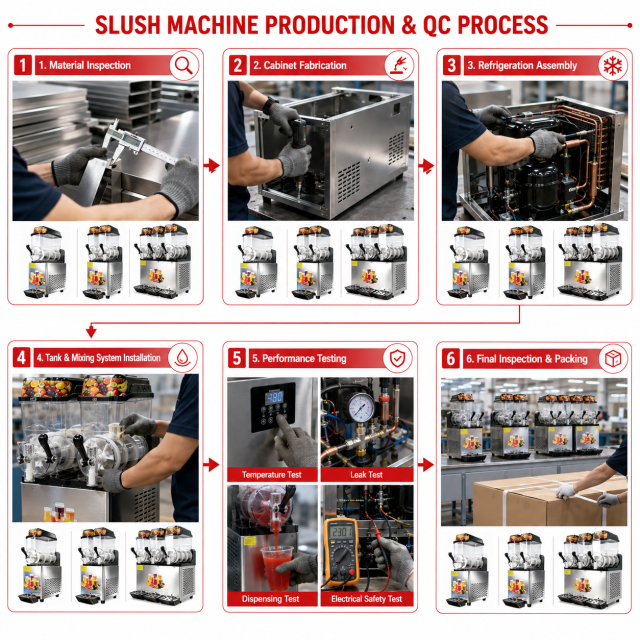
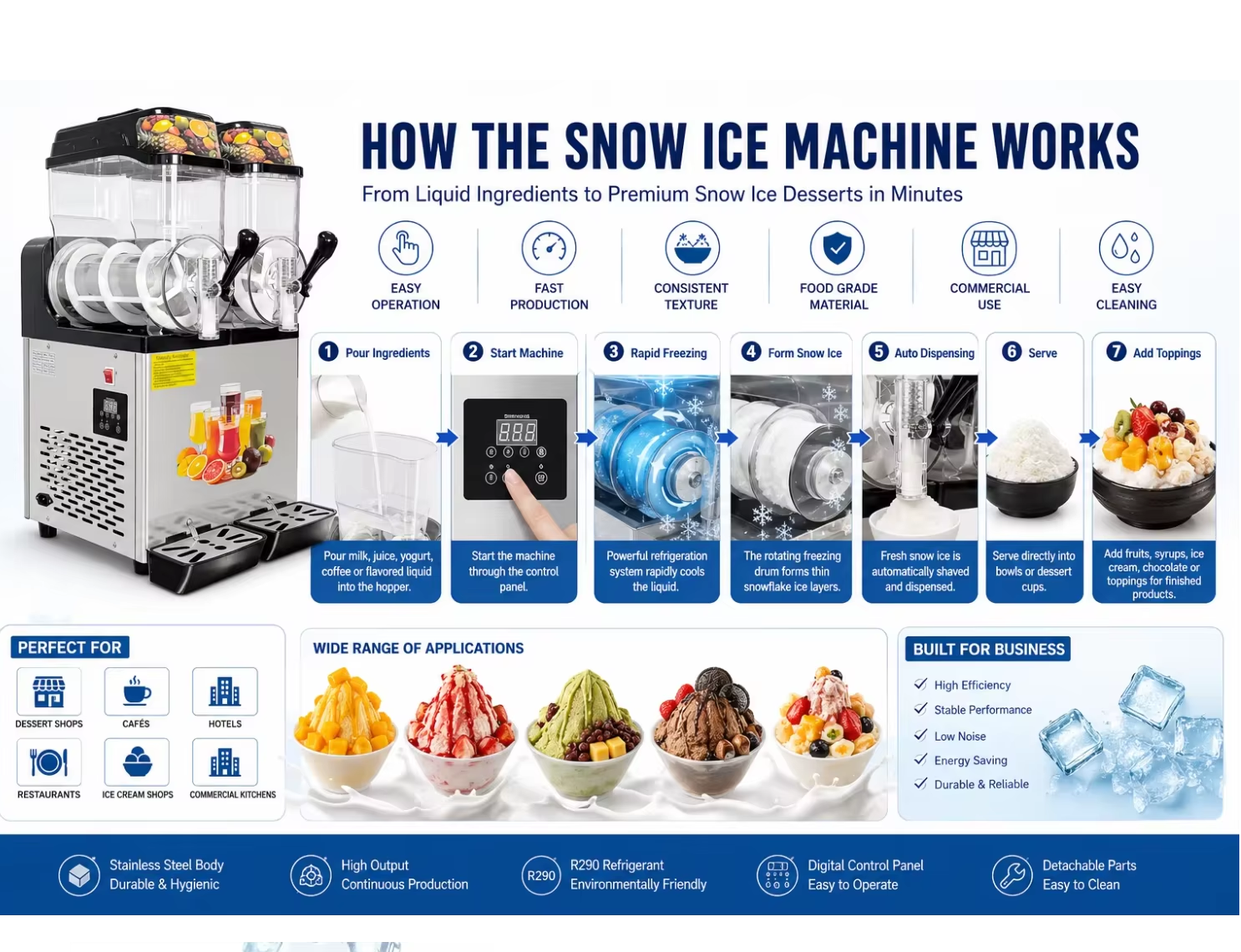
Our efficient refrigeration system helps produce frozen beverages quickly, allowing businesses to serve customers faster during busy periods.
A stable cooling system maintains a smooth and consistent slush texture, improving beverage quality and customer satisfaction.
Double and triple tank models allow multiple flavors to be served simultaneously, helping increase menu options and sales opportunities.
The combination of R290 refrigerant and efficient compressor options reduces energy consumption while maintaining reliable cooling performance.
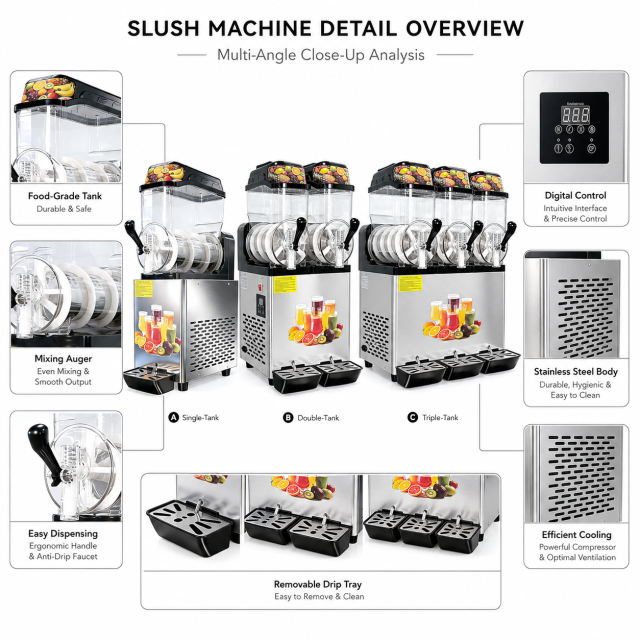
The removable tank design makes cleaning faster and easier, reducing maintenance time and improving operational efficiency.
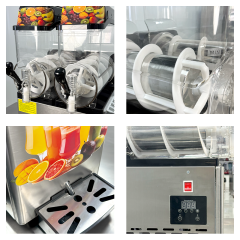
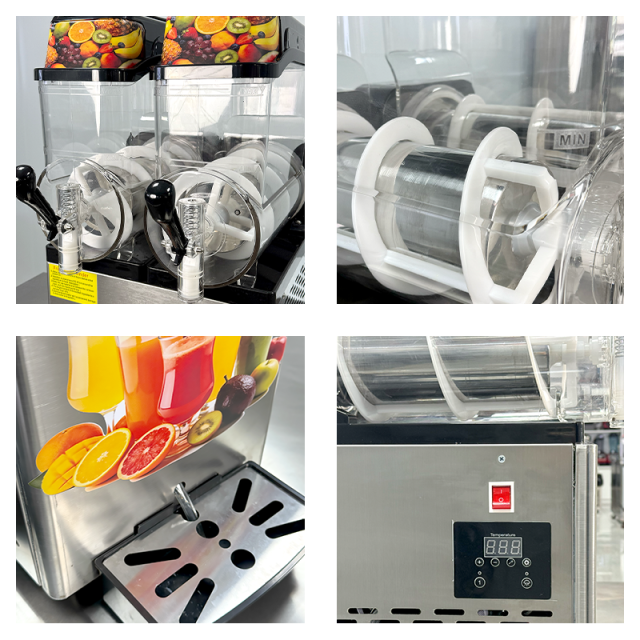
The Commercial Slush Machine Series is designed to produce smooth and consistent frozen beverages throughout the day. Each tank offers a 12-liter capacity, allowing operators to serve a variety of drinks while maintaining stable temperature control. The transparent bowls provide excellent product visibility, helping attract customer attention and increase impulse purchases.
This frozen beverage machine is widely used in coffee shops, restaurants, convenience stores, cinemas, dessert shops, hotels, bars, fast food chains and catering businesses. It is suitable for preparing slush drinks, granita, frozen juice, iced tea, frozen cocktails, fruit beverages and other chilled refreshments, making it an ideal choice during warm seasons and high-traffic periods.
Constructed with a durable stainless steel cabinet and equipped with an energy-efficient R290 refrigeration system, this commercial slush machine is built for reliable daily operation. The removable tanks simplify cleaning and maintenance, while multiple tank options allow businesses to offer several flavors simultaneously. OEM and ODM customization is also available for distributors and commercial kitchen equipment brands.
| Model | Tank Configuration | Capacity | Voltage | Power | Refrigerant | Product Size (mm) | Packing Size (mm) | Net Weight | Gross Weight |
|---|---|---|---|---|---|---|---|---|---|
| LA112 | Single Tank | 12L | 220V / 50Hz | 570W | R290 / 90g | 260 × 550 × 790 | 310 × 610 × 930 | 30 kg | 44 kg |
| LA212 | Double Tank | 12L × 2 | 220V / 50Hz | 800W | R290 / 120g | 400 × 550 × 790 | 470 × 610 × 930 | 42 kg | 58 kg |
| LA312 | Triple Tank | 12L × 3 | 220V / 50Hz | 1000W | R290 / 160g | 600 × 550 × 790 | 680 × 610 × 930 | 57 kg | 76 kg |
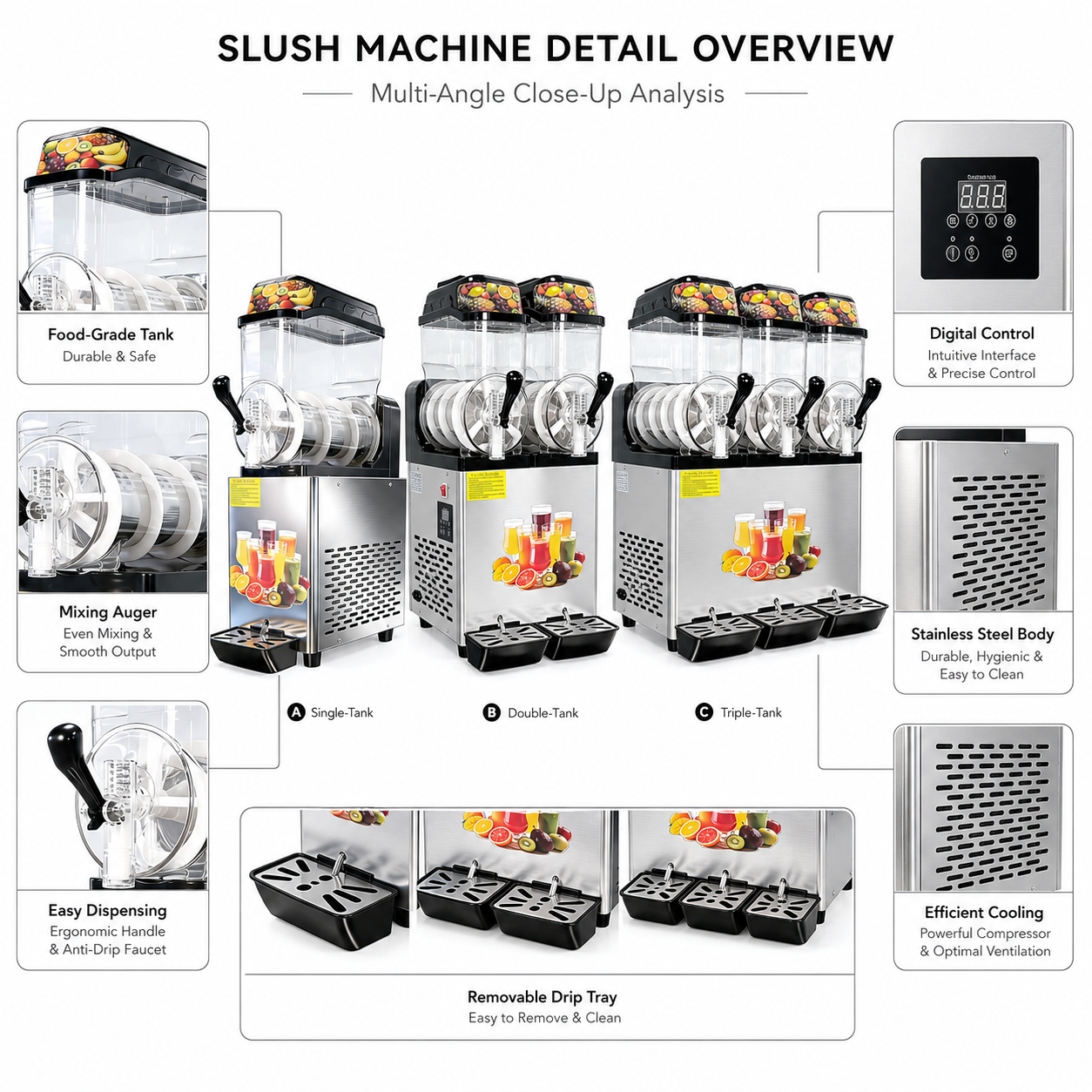
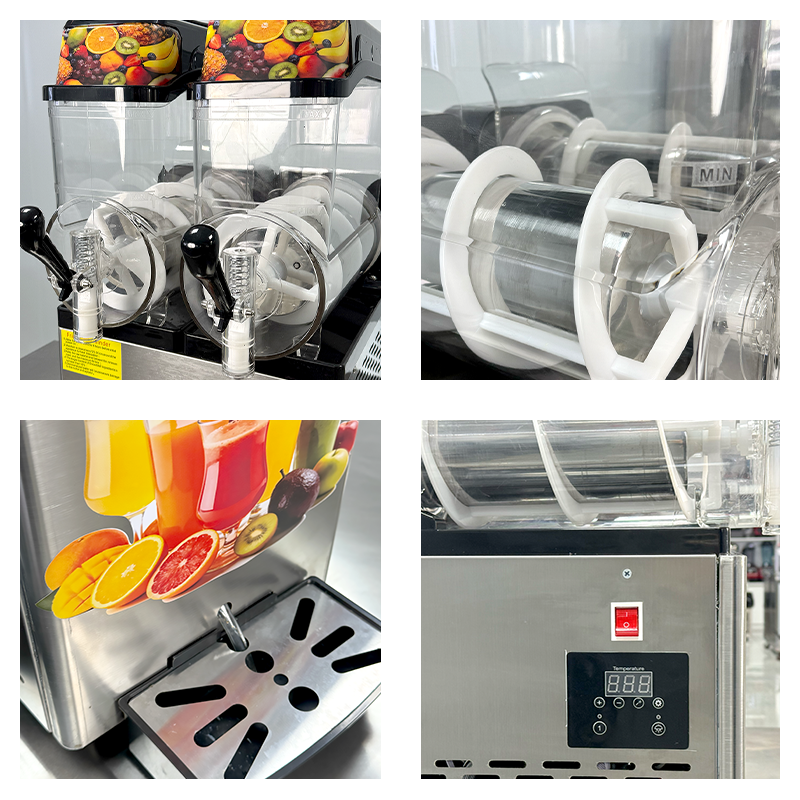
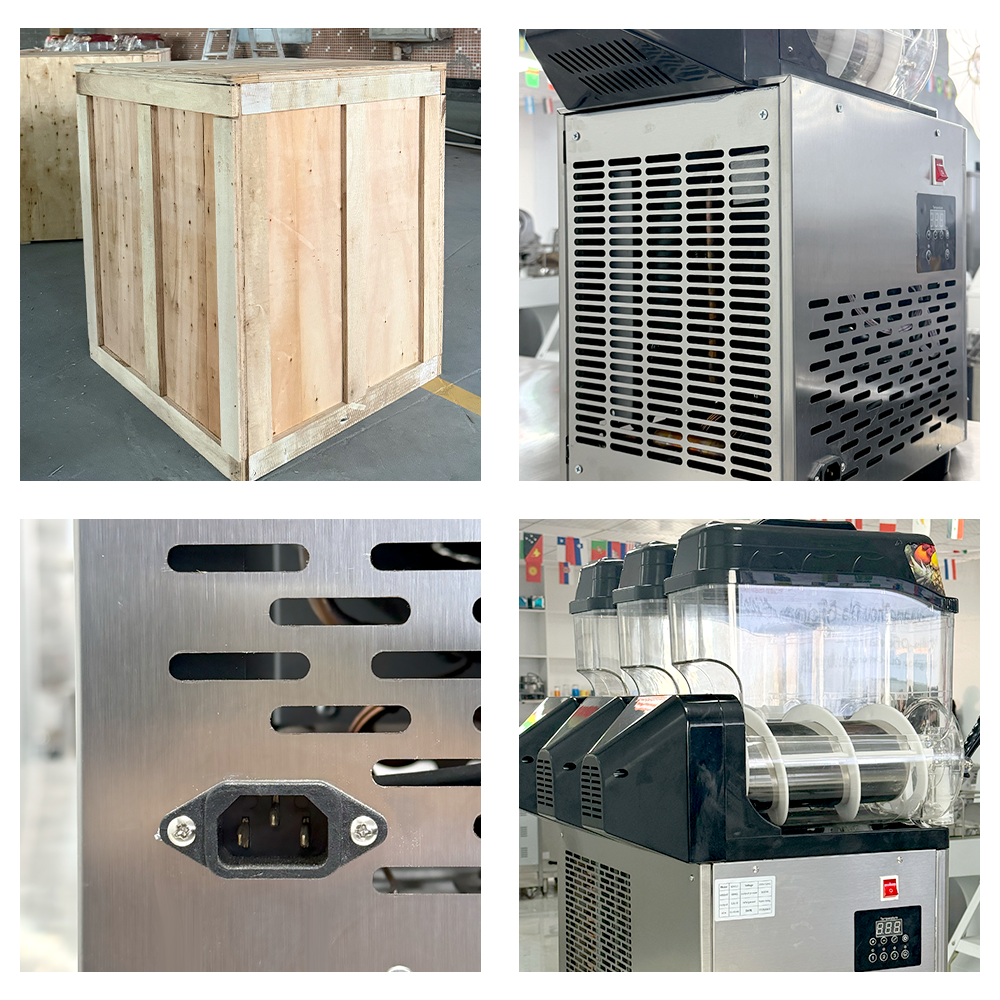
This commercial slush machine is ideal for:
Coffee Shops , Bubble Tea Stores , Juice Bars , Convenience Stores , Restaurants , Fast Food Chains , Dessert Shops , Ice Cream Shops , Bars & Lounges , Hotels & Resorts , Cinemas , Theme Parks , Food Courts , Catering Services , Event Venues , Supermarkets......Frozen drinks live or die on consistency, and that is the whole design brief behind this commercial slush machine series. Three models share one platform — a single-tank, a double-tank and a triple-tank unit — and every tank holds its own batch on its own refrigeration circuit and its own control. A flavour can be frozen, held or taken out of service without disturbing anything in the bowl beside it.
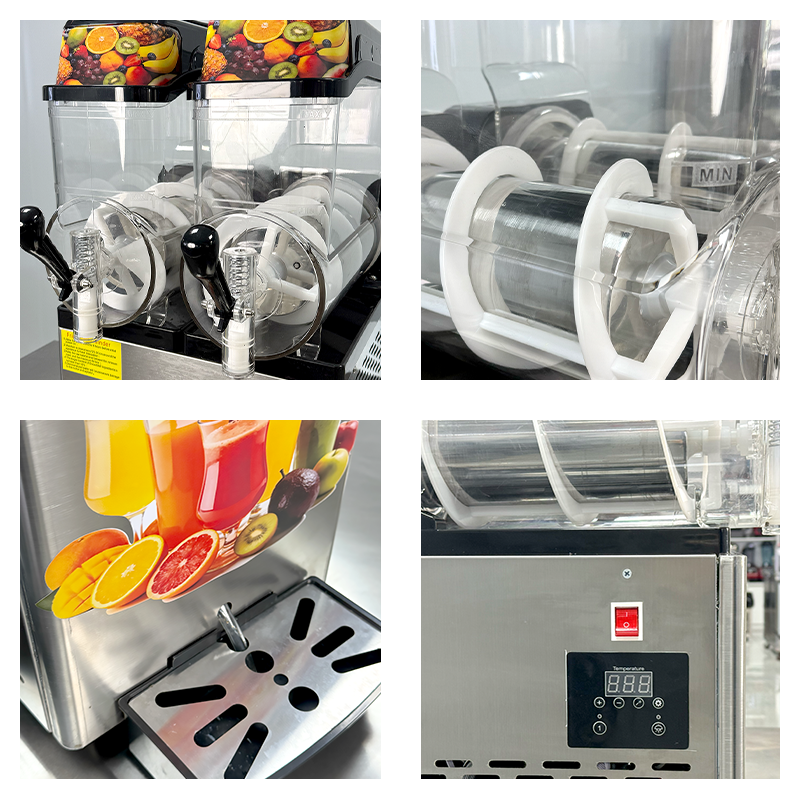
The bowls are food-grade and transparent, which matters more than it sounds. Customers see the colour and texture of what they are about to buy, staff can see at a glance when a tank needs topping up, and a full row of bright bowls reads as a menu from across the room. The cabinet is stainless steel, the machine is sized for countertop use, and the tanks and dispensing parts lift off by hand for cleaning rather than needing tools and a strip-down.
Most buyers are cafés, coffee shops, juice and bubble tea bars, dessert shops, convenience stores, bars, cinemas and catering kitchens adding frozen drinks to an existing beverage menu — plus distributors who want one series covering small outlets and high-volume sites without carrying three unrelated machines. The tanks run slush syrups, granita mixes, frozen juice, iced tea, frozen cocktails and fruit drinks, so one purchase can cover a summer menu and a dessert list at the same time.
Day to day the routine is the same as any beverage station: fill the tank, let it come to consistency, serve, top up with chilled mix. If you already run an ice machine, a blender station or a soft serve machine, this sits alongside them and uses the same staff and the same counter.
Slow freeze-down is the quiet killer of a frozen drink counter. When a tank is not ready, staff either keep a queue waiting or serve something thin and half-frozen, and either way the product takes the blame. Three things decide how quickly a tank reaches serving consistency: the recipe and its sugar content, the temperature of the mix going in, and how warm the room is. One thing decides how well the machine holds it once it gets there.
Each tank on this series has its own refrigerated circuit, so freeze-down and holding happen independently. That changes how a shift is planned. You can start one tank early for the opening trade while a second is filled later for the lunch rush, and you never have to bring the whole counter down to rebuild a single flavour.
The operators who get the fastest service keep three habits. They freeze the first batch before the doors open rather than during the first order. They top up with chilled mix from the fridge instead of warm mix from the counter. And they keep tanks above the minimum level, because the last couple of litres always freeze and hold more slowly than a full tank.
Ambient heat is the other variable worth managing. A commercial slush machine parked beside a griddle, a fryer or in direct afternoon sun takes longer to reach consistency and works harder to hold it — a couple of metres of separation is worth more than any control change. Before you promise customers a service time, run a trial with your own syrup in your own room: recipes differ enough that the interval is most accurately measured on your mix and your machine, not on a general figure.
A commercial frozen drink machine is a menu decision as much as an equipment decision, and the tank count is where that decision gets made. One tank does one flavour properly — enough for a kiosk, a small café or a hotel breakfast outlet that wants a single signature drink. Two tanks let you pair a permanent classic with a rotating flavour, which keeps regulars interested without reprinting a menu. Three tanks open the door to a full frozen list: a slush, a fruit or iced tea option, and a frozen cocktail or iced coffee at a higher price point.
It helps to think in terms of what each tank is for rather than how many you can afford. A dessert shop might run one tank of lemon granita, one of a dairy slush and one of a fruit juice mix. A bar might keep two tanks on cocktails and one on a non-alcoholic option for drivers and families. Contrasting colours across the bowls sell the range before a customer reads a word.
Rotation is the other advantage of extra tanks. Seasonal flavours — mango, watermelon, spiced fruit, winter punches — can be swapped in by cleaning and refilling a tank rather than buying another machine, so the same counter carries a different menu in July and December.
What to avoid is spreading the same volume across more tanks than your staff can fill and clean. A two-tank machine that is always full and always fresh outperforms a three-tank machine running half-empty bowls through a long shift, and the extra tank only pays for itself when you genuinely keep it working.
Reliability on a machine like this means three things: the product is the same at the end of the shift as at the start, one problem does not take the whole counter down, and cleaning does not eat into trading time.
The first is the work the refrigeration does all day — holding a tank at serving consistency instead of letting it drift between thin and solid as it is drawn down and topped up. The second comes from the independent tanks: if one bowl is being cleaned, or one flavour has sold out, the others keep selling, so a two- or three-tank counter always has something to serve. The third is the removable tank design, which turns the daily clean into a task that fits between services.
For buyers running chains, hotel outlets or rental fleets there is a fourth point: repeatability. The same series, the same control layout and the same cleaning routine across every unit means a new site can be trained from the machine next door instead of from a manual.
Worth doing before you buy: run your own mix in the configuration you are considering, check the draw from a full tank and from a nearly empty one, and ask for the recommended spare parts list for your market so you can hold the few items that would otherwise interrupt service. Ask your sales contact what documentation and technical guidance is available for your country rather than assuming your local technician has seen this model before.
Cabinet and Working Parts
The cabinet is stainless steel rather than a painted panel over a frame, because a beverage station is a wet, sticky place and the outside of the machine gets wiped as often as the inside of the tank. Everything that touches the drink is food-grade, and the tanks and dispensing assemblies come off by hand. The three models grow in width rather than depth, so you can plan a counter run knowing a larger configuration will not suddenly stick out into the aisle. Each unit is specified for the duty of a working beverage counter — running from opening to close with the compressor cycling against room heat all day — rather than for occasional weekend use.
Refrigeration and Compressor Choice
Every tank runs its own refrigeration circuit on R290, with a charge matched to the size of the model. Two decisions are worth making deliberately at specification stage. The first is the compressor: standard units use reliable, well-known compressor brands that keep the price sensible and parts easy to source, while internationally recognised names can be specified on request for markets that expect them or already stock their parts. The second is service access — think about who will look after the machine locally and whether the compressor option you choose is the one they know.
OEM and ODM Support
As a slush machine manufacturer we build for distributors and commercial kitchen equipment brands as well as for individual operators, and OEM and ODM requests are part of the normal order flow: your branding, your labels, your packaging and a specification matched to the market you sell into. We ask only that these requirements are settled before production is scheduled, because a market-specific build is much easier to plan in than to retrofit.
| Configuration | Single tank | Double tank | Triple tank |
| Model | LA112 | LA212 | LA312 |
| Tank capacity | 12 L | 12 L × 2 | 12 L × 3 |
| Voltage / frequency | 220 V / 50 Hz | 220 V / 50 Hz | 220 V / 50 Hz |
| Power | 570 W | 800 W | 1000 W |
| Refrigerant | R290 / 90 g | R290 / 120 g | R290 / 160 g |
| Product size (mm) | 260 × 550 × 790 | 400 × 550 × 790 | 600 × 550 × 790 |
| Packing size (mm) | 310 × 610 × 930 | 470 × 610 × 930 | 680 × 610 × 930 |
| Net weight | 30 kg | 42 kg | 57 kg |
| Gross weight | 44 kg | 58 kg | 76 kg |
Double and triple tank models allow multiple flavors to be served at the same time, which helps widen the menu and open up more sales opportunities.
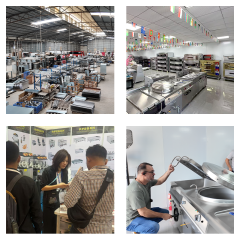
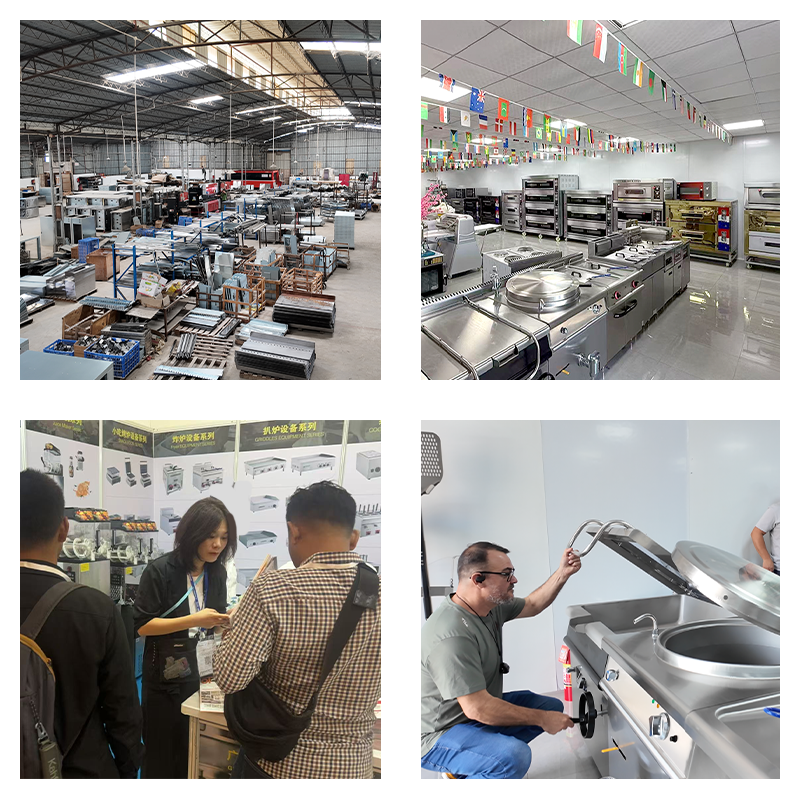
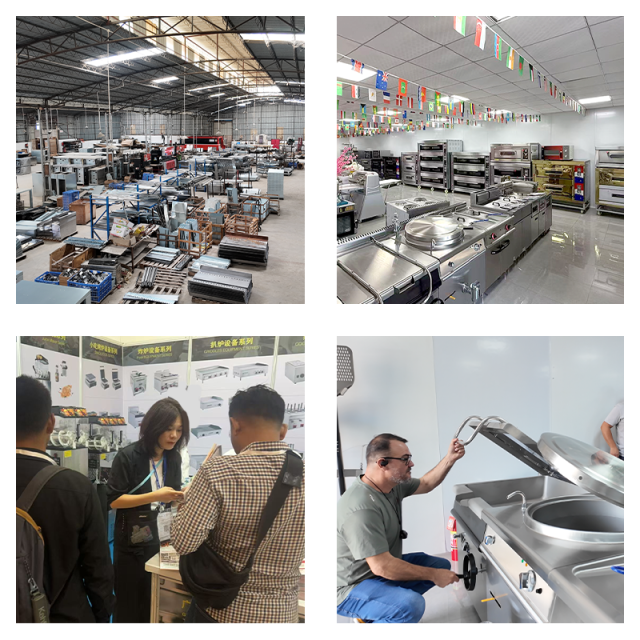
Ola Oficina Co., Ltd is a professional kitchen equipment supplier serving hotels and restaurants, and we work with buyers who would rather source from a company covering a full range than from several separate vendors. Purchasing, documentation and communication stay with one team from enquiry through delivery. OEM and customisation enquiries are welcome — share your branding or configuration requirements and we will confirm what we can support. Send us your project details and we will reply with availability, production scheduling and shipping arrangements.
Start with how many flavours you want on the counter at the same time. A single tank slush machine covers one signature drink and takes the least counter width; two tanks let you pair a permanent classic with a rotating flavour; three tanks give you a full frozen menu, including a cocktail or an iced coffee at a higher price point. The second factor is labour — every tank is another bowl to fill, top up and wash each shift. Multi-tank models let you rest one tank while the others keep selling, which is what makes cleaning during trading hours realistic.
Under normal operating conditions, a chilled mixture reaches ready-to-serve slush consistency in roughly 30 to 60 minutes. The actual time depends on your recipe, the starting temperature of the mix, the room temperature and how full the tank is. Starting from a pre-chilled mix shortens the wait noticeably, which is why most operators freeze their first batch before opening and top up with chilled mix through the day.
Every model in the series runs on R290, a natural refrigerant, with a charge sized to the model. Compared with many older refrigerants it cools efficiently while drawing less energy, and it is accepted under the environmental rules of many markets. That matters twice over: it affects the running cost per drink, and it affects whether the unit clears your destination's import requirements. Rules differ from country to country, so check the current requirements for your market with your sales contact before shipping.
Yes. The refrigeration system is designed to keep running through a full trading day, and the working parts are specified for the duty an industrial slush machine sees in busy venues. In practice the limit is usually the mix rather than the machine: tanks topped up with chilled product and given a few minutes to recover after a run of drinks hold their texture far better than tanks drained to the bottom and refilled with warm mix.
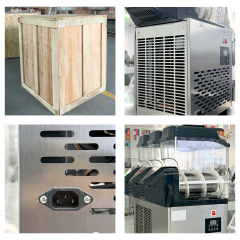
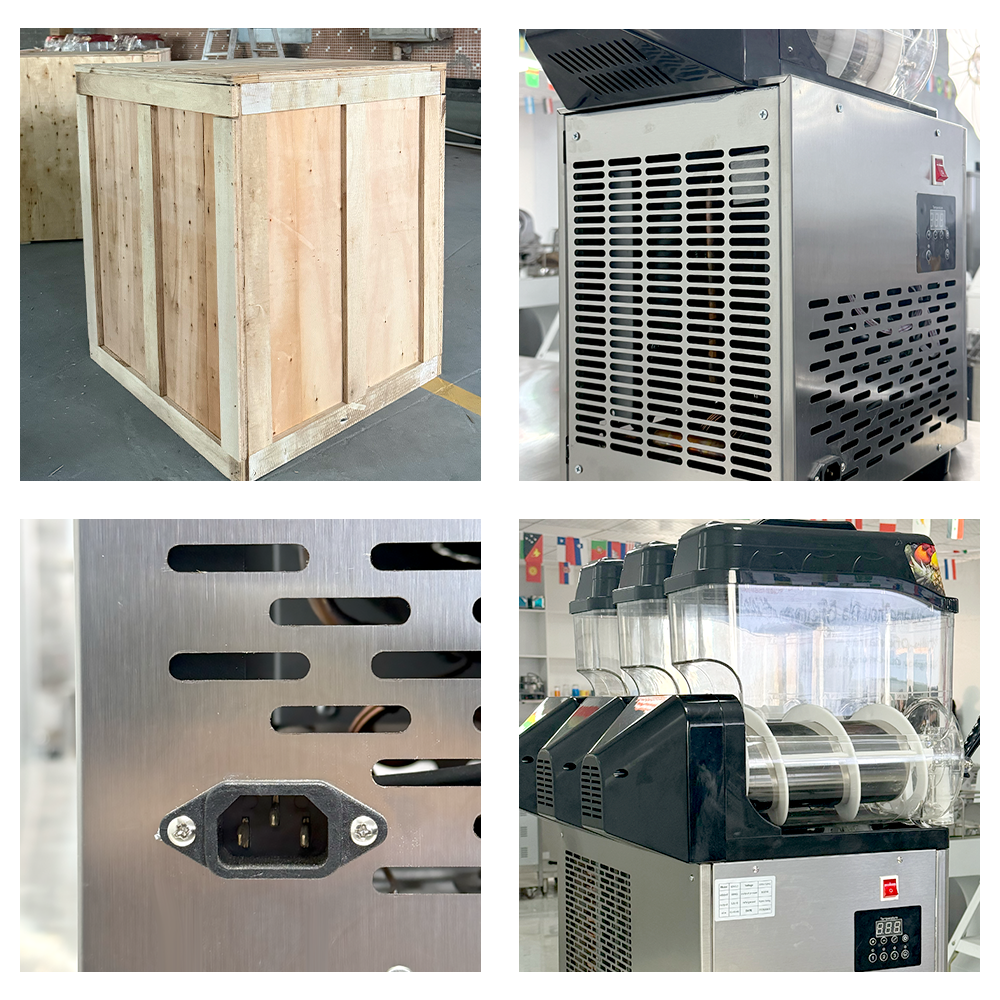
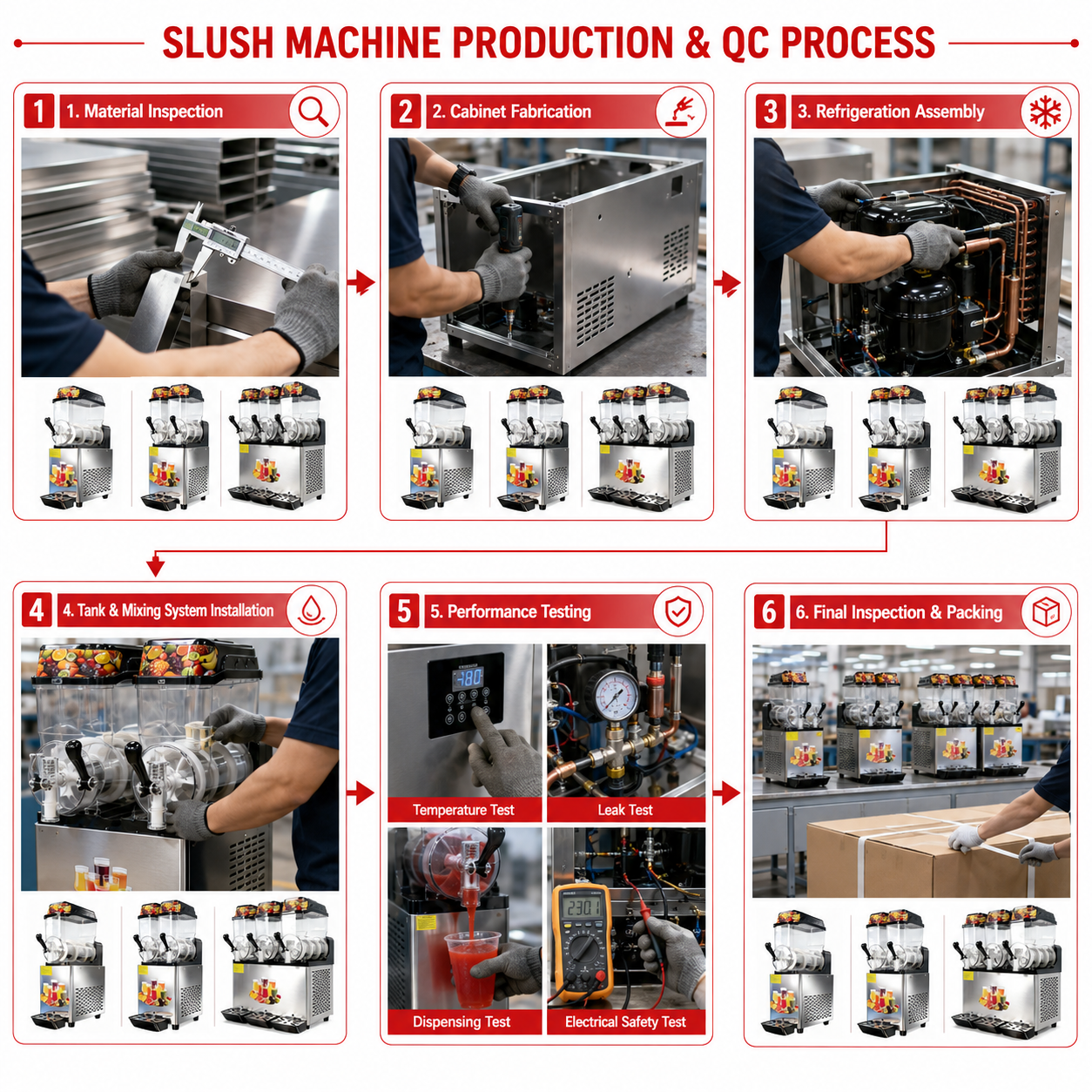
Look past the unit price. Compare cooling performance, refrigerant type, the electrical specification for your market, how quickly the machine can be cleaned, and whether spare parts and technical guidance will be available after delivery. Packing matters on a long sea route, so check that the carton and internal protection suit container loading. It is also worth raising configuration questions — compressor option, documentation, market-specific build — with a slush machine manufacturer before you commit to a container, because those details are far harder to change once production has started.
Standard units are fitted with reliable compressors from well-known Chinese brands — Wanbao, GMCC and Donper are the usual choices — which keeps cost sensible and parts easy to source. If your market prefers an internationally recognised name, Embraco, Secop or Tecumseh can be specified on request. Compressor choice affects cost, noise and how easily parts are found locally rather than the freezing principle itself, so it is worth fixing at quotation stage instead of after production.